Why size matters
A telescope's mirror collects light like a bucket collects rain. A bigger mirror gathers more light, revealing fainter objects, and can in principle see finer detail.
Segmented mirrors
Single mirrors much larger than about 8 metres are very difficult to cast and transport. The Keck telescopes pioneered mirrors made of 36 hexagonal segments, each controlled precisely to act as one surface.
Beating the blur
Turbulence in the atmosphere makes stars twinkle and blurs images. Adaptive optics use deformable mirrors that change shape hundreds of times per second, guided by bright reference stars or laser-generated artificial stars.
The next giants
The European Southern Observatory's Extremely Large Telescope in Chile's Atacama Desert will have a 39-metre mirror made of 798 segments. It aims to study planets around other stars and the first galaxies.
Sources & further reading
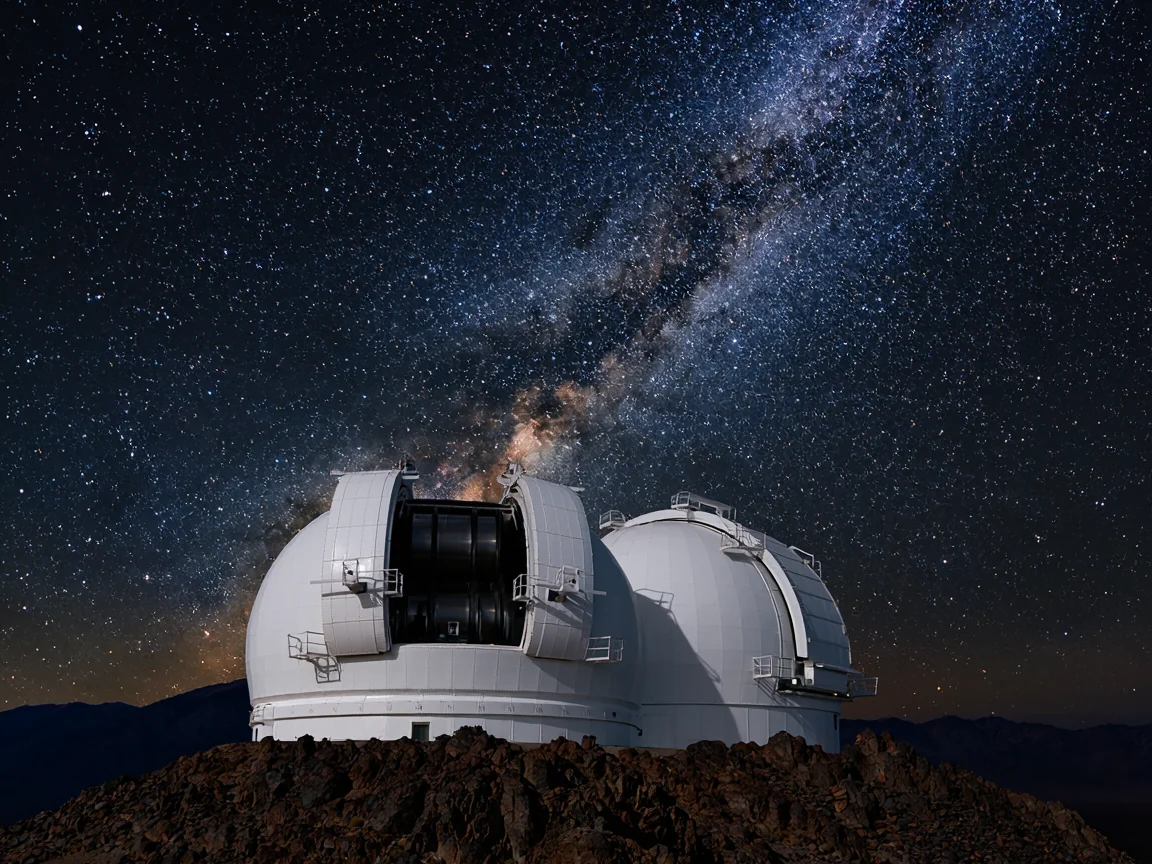
Construction schedules for new telescopes may change. Photograph: original AI-generated illustration (Adobe Firefly). Reference organisations do not endorse this website.