How giant icebergs form
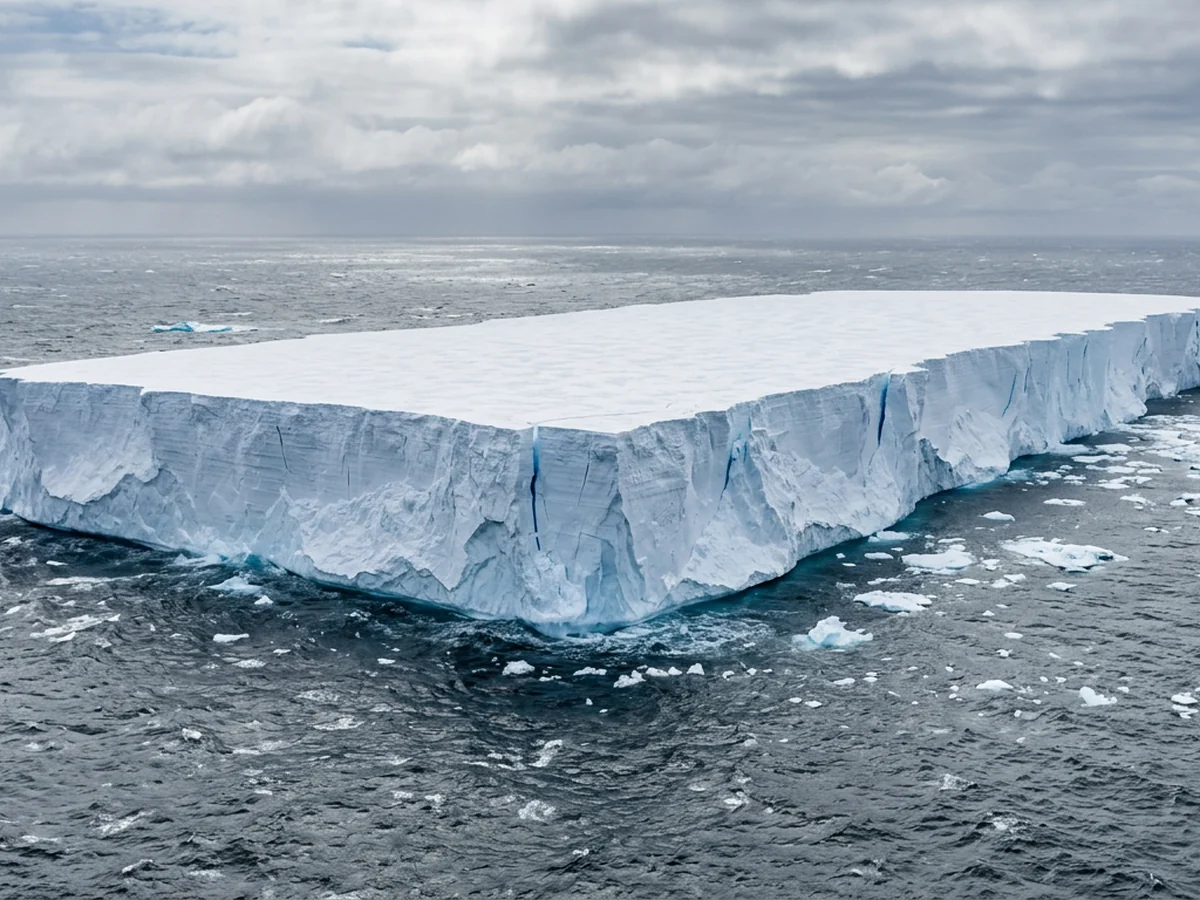
Tabular icebergs break off the front of ice shelves along cracks that grow over years. They have flat tops and steep sides and can be hundreds of metres thick, with most of their mass below the waterline.
B-15
B-15 broke from the Ross Ice Shelf in March 2000. It was about 295 km long and 37 km wide. Over the following years it split into fragments, some of which drifted for more than a decade.
A-68 and A23a
A-68 calved from the Larsen C Ice Shelf in 2017 and drifted north toward South Georgia before disintegrating in 2021. A23a calved in 1986 but stayed grounded on the seabed for decades, before breaking free in 2020 and drifting into the Southern Ocean.
Tracking from space
The US National Ice Center and other agencies use satellites to name and track large icebergs, which can pose risks to shipping and affect wildlife when they ground near islands.
Sources & further reading
Areas are approximate. Photograph: original AI-generated illustration (Adobe Firefly). Reference organisations do not endorse this website.