Why passwords are not enough
Passwords are leaked in data breaches, guessed, reused across sites and handed over to convincing fake login pages. Once criminals have a list of email addresses and passwords from one breach, they try them automatically on banking, email and shopping sites, knowing many people reuse them. Two-factor authentication, often shortened to 2FA, adds a second lock. Security specialists describe three kinds of factor: something you know, like a password or PIN; something you have, like a phone or hardware key; and something you are, like a fingerprint. Requiring two different kinds means that stealing one is not enough, which stops a large share of account takeovers.
Codes by text message
The most familiar version sends a one-time code by SMS. It is easy to use and far better than a password alone, but it has weaknesses. Text messages are not encrypted end to end, and criminals sometimes persuade a mobile operator to transfer a victim's number to a new SIM card, a fraud known as SIM swapping, so the codes arrive on the attacker's phone. Messages can also be intercepted through weaknesses in the global signalling system that phone networks use. For these reasons, many banks, including in the UAE, have been moving customers from texted codes towards approvals inside their own secure apps.
Authenticator apps
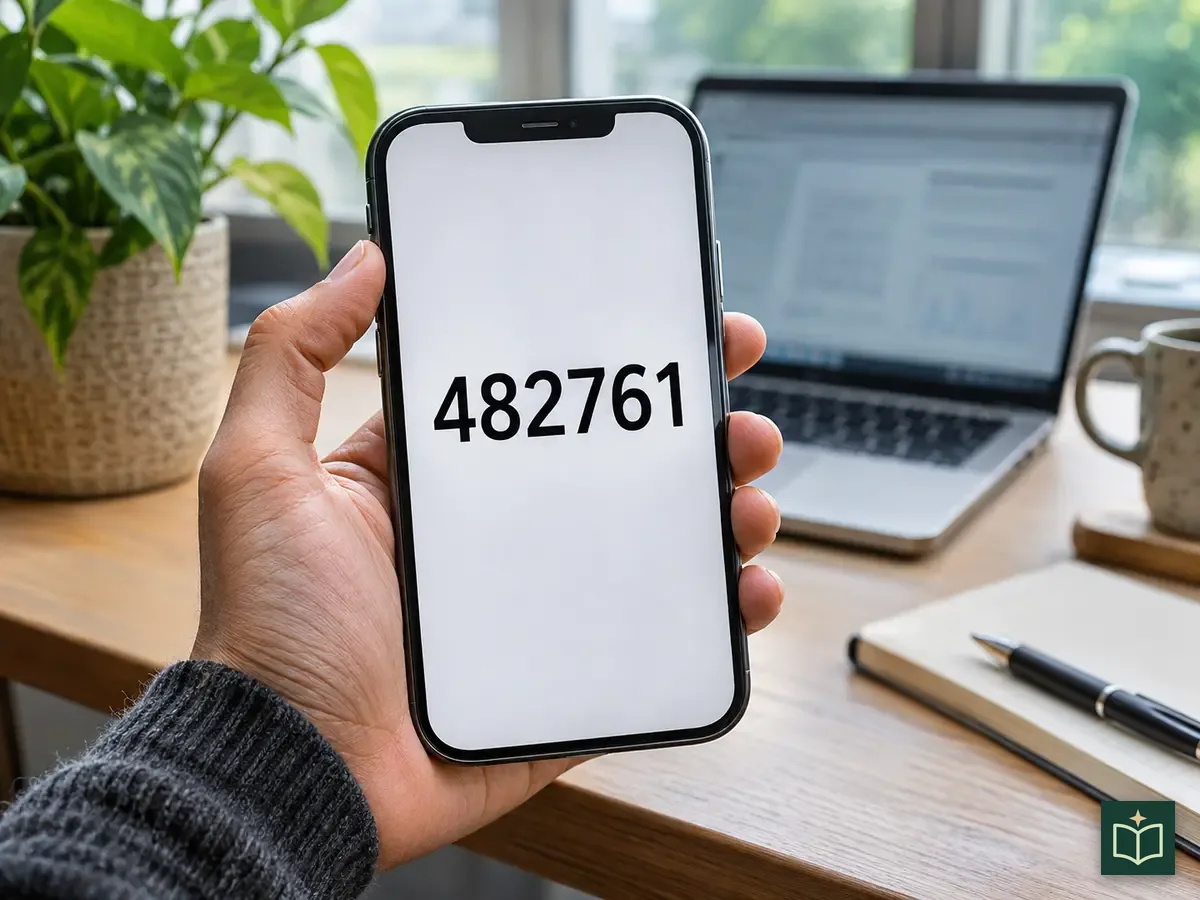
Authenticator apps generate codes on the phone itself. When you set one up, the website and the app share a secret key, usually by scanning a QR code. From then on, both sides combine that secret with the current time, using an open standard, to produce the same six-digit number, which changes every 30 seconds. No message travels over the phone network, so SIM swapping does not help an attacker. Push-based apps work slightly differently, displaying a prompt that asks 'Is this you signing in?'. Both are stronger than SMS. It is important to save the backup codes offered during setup, in case the phone is lost.
Security keys and passkeys
The strongest common option is a hardware security key or a passkey stored on a phone or computer. These use public-key cryptography: the device proves its identity by signing a challenge from the website, without sending any reusable secret. Crucially, the cryptography is tied to the genuine website's address, so a fake login page on a look-alike domain receives nothing useful. That makes these methods resistant to phishing, which codes typed by hand are not. Passkeys combine this protection with convenience, unlocked by a fingerprint, face scan or device PIN, and are increasingly offered by major email, banking and shopping services.
How attackers respond
Criminals have adapted. Some build fake login pages that relay a victim's password and code to the real site in real time, capturing access before the code expires. Others send a flood of push approval requests late at night, hoping a tired user taps 'approve' to make them stop, a tactic called prompt bombing. The most common technique remains social engineering: a caller claiming to be from a bank or a government office asks the victim to read out a code 'to verify' their identity. Genuine organisations do not ask for these codes. A request to share one should always be treated as a warning sign.
Setting it up wisely
Security agencies such as the UK's National Cyber Security Centre and the US Cybersecurity and Infrastructure Security Agency recommend turning on two-factor authentication for important accounts, beginning with email, since email can reset most other passwords. Use the strongest option a service offers, preferably passkeys or a security key, then an authenticator app, with SMS as a fallback rather than not at all. Keep recovery codes somewhere safe and offline. Register a second method in case one device is lost. Two-factor authentication adds a few seconds to some logins, but those seconds stand between a leaked password and a compromised account.
Sources & further reading
Figures are rounded and widely published; check the linked organisations for the latest editions. These organisations do not endorse this website.