From bumping to mapping
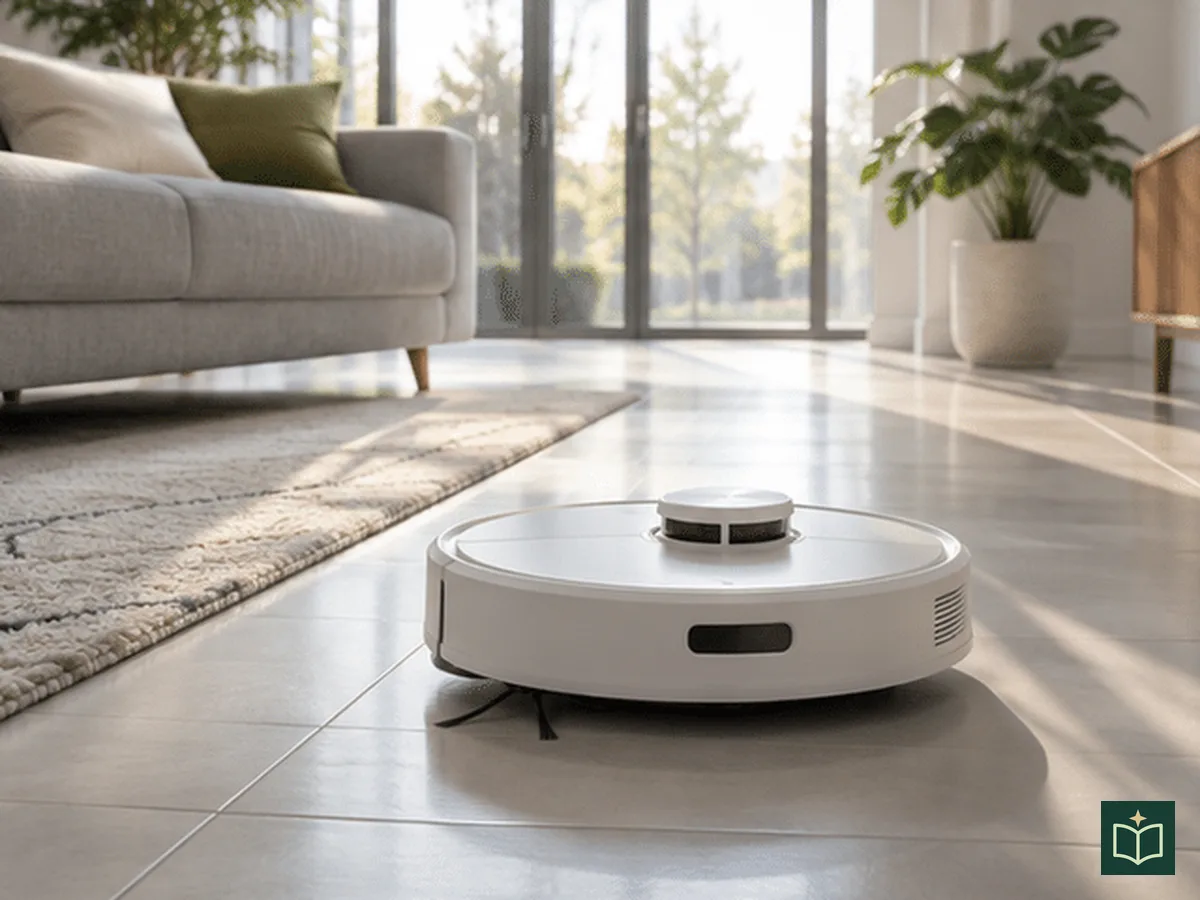
The first mass-market robot vacuums, launched in the early 2000s, navigated mostly by bumping into things. They drove until a bumper touched an obstacle, turned by some angle and set off again, mixing in spirals and wall-following. Given enough time this random approach covered most of a floor, but it was slow, missed patches and could not tell which room it was in. Modern models behave very differently. They build a map of the home, know where they are on it, clean in neat parallel lanes, return to their dock to recharge, and resume where they stopped. Owners can name rooms, schedule cleaning and draw no-go zones on a phone app.
Mapping while moving
The key technique is called SLAM, simultaneous localisation and mapping. It tackles a chicken-and-egg problem: to build an accurate map, the robot must know where it is, and to know where it is, it needs a map. SLAM solves both together. As the robot moves, it estimates its position from wheel rotations and a gyroscope, a process called odometry. Those estimates slowly drift, because wheels slip on rugs and tiles. At the same time, sensors record features such as walls and table legs. When the robot sees familiar features again, software corrects its position and refines the map. Over a few cleaning runs, the map becomes stable and detailed.
Lasers and cameras
Robots sense their surroundings in two main ways. Many carry lidar, a small spinning laser turret on top that measures distances to surrounding surfaces thousands of times a second, producing a precise outline of a room even in darkness. Others use a camera, often pointed upwards or forwards, that recognises visual features such as door frames, light fittings and ceiling corners, an approach called visual SLAM. Cameras are cheaper and can identify objects but struggle in dim light. Extra sensors fill the gaps. Infrared cliff sensors underneath stop the robot falling down stairs, bumpers confirm contact, and front-facing depth sensors or cameras spot obstacles such as shoes, socks and charging cables.
Planning the clean
Once a map exists, software divides it into rooms, usually by detecting doorways, and plans a path through each. A common pattern is the back-and-forth lane, like mowing a lawn, followed by a pass along the edges. Simple arithmetic shows why planning matters. A living area of 80 square metres, cleaned with a brush path 0.3 metres wide, requires about 267 metres of travel. At a steady 0.3 metres per second, that alone takes about 15 minutes, before turns, overlaps between lanes and edge cleaning. A random bumping robot might cover the same area several times to reach every corner. Planned routes also let the robot judge whether its battery can finish.
What confuses them
Homes are hard environments. Mirrors and glass doors can reflect or pass laser beams, creating phantom rooms or hiding real walls. Very dark carpets can absorb infrared light so thoroughly that cliff sensors mistake them for a drop, leaving the robot refusing to cross. Moving furniture, open and closed doors, and items left on the floor force the map to be updated. Thin cables, tassels and pet mess remain classic hazards, although object recognition has improved. Robots can also lose track of their location if they are picked up and carried elsewhere, a situation engineers call the kidnapped robot problem. Good systems recover by matching what they see against the stored map.
Maps and privacy
A map of your home is personal data. It reveals the layout, the size of rooms and sometimes the location of furniture, and camera-equipped models may capture images of people and possessions. Maps are often stored on the manufacturer's cloud servers to power the phone app. In 2022 images captured by development versions of robot vacuums, used for testing by paid volunteers, were found to have been shared online by contractors labelling the data, prompting wider concern. Owners can reduce risks by checking privacy settings, choosing models that process images on the device, keeping software updated and reading what data is shared. The same mapping methods also guide warehouse and delivery robots.
Sources & further reading
Figures are rounded and widely published; check the linked organisations for the latest editions. These organisations do not endorse this website.