Pixels, not letters
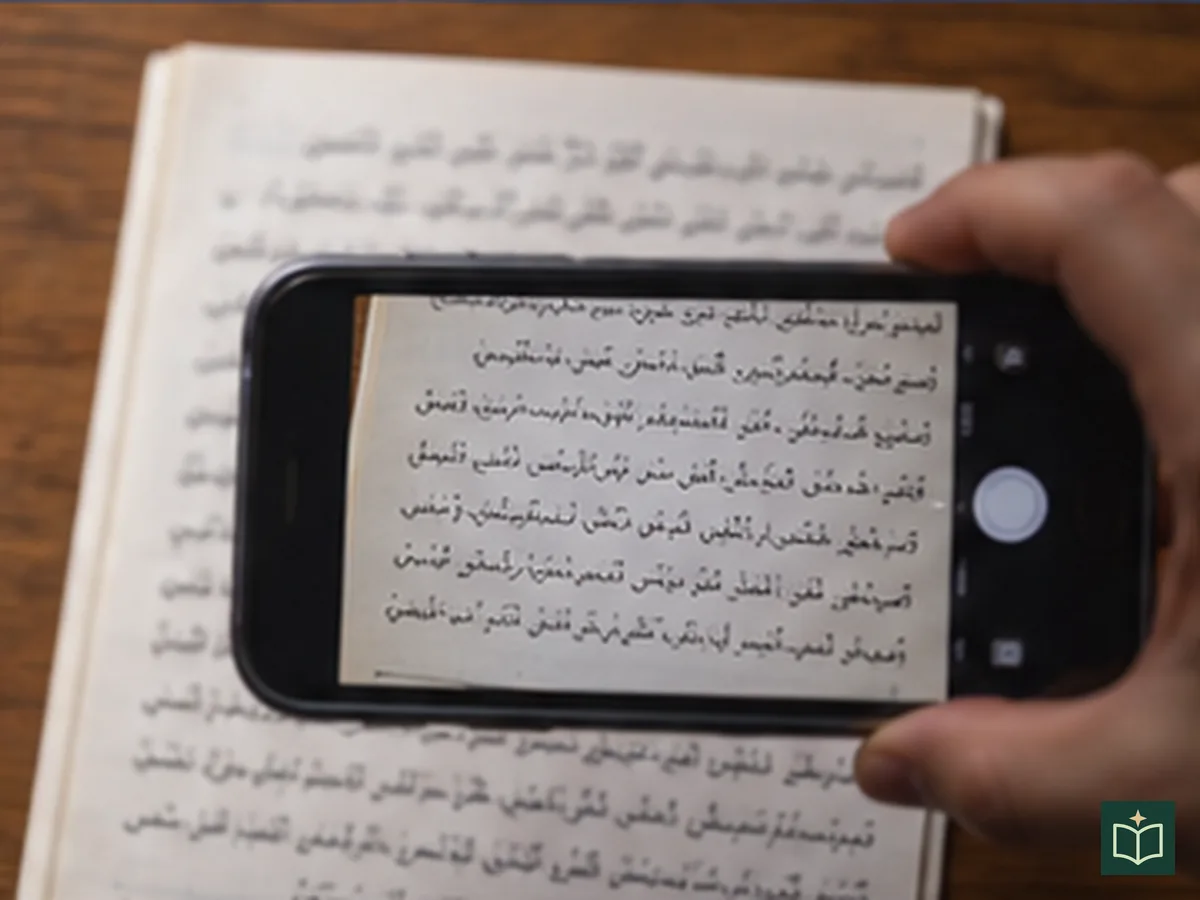
To a computer, a photograph of a page is just a grid of coloured dots. It has no idea that a cluster of dark pixels forms the letter a, or that a row of such clusters is a sentence. Optical character recognition, or OCR, bridges that gap, producing text that can be searched, copied, translated or read aloud. It is everywhere: scanning receipts into expense apps, digitising old newspapers and manuscripts, reading licence plates, sorting post and extracting details from forms and identity documents. Phones now do it instantly through the camera. The underlying task is surprisingly hard, because the same letter can appear in thousands of fonts, sizes, colours and states of blur, smudge and fading.
Preparing the page
Before any reading, the software tidies the image. It detects whether the page is tilted and rotates it straight, and corrects the curve of a book's spine or the perspective of a photo taken at an angle. It evens out shadows and converts the picture to sharp black-and-white, a step called binarisation, so ink stands out from paper. Then comes layout analysis. The system finds blocks of text, separates columns, spots headings, tables and images, and works out the reading order. Mistakes here are costly: if two newspaper columns are merged, every line will be read across both, producing nonsense even when each individual word is recognised perfectly.
From shapes to characters
Early OCR compared each isolated character with stored templates or measured features such as loops, strokes and line endings. That required cutting text into individual letters first, which fails when letters touch or break apart. Modern systems use neural networks trained on millions of examples. Many read an entire line at once, scanning it as a sequence and outputting the most likely string of characters without ever deciding exactly where one letter ends. A language model then weighs the result. If the shapes are ambiguous between 'rn' and 'm', or between the digit 0 and the letter O, context decides. On a clean printed page, character accuracy commonly exceeds 99 per cent.
Why accuracy still matters
Ninety-nine per cent sounds excellent until you apply it. A dense page might hold 2,000 characters, so one error in a hundred still means about 20 mistakes per page, perhaps a wrong digit in an invoice total or a misread name. That is why serious digitisation projects add confidence scores, flag uncertain words for human checking, and validate fields such as dates and account numbers against expected formats. Quality falls sharply with poor input: low resolution, motion blur, glare, decorative fonts, faded photocopies and handwriting. Handwriting recognition is usually treated as a separate, harder task, because individual writers form letters so differently and join them in unpredictable ways.
The challenge of Arabic
Arabic shows why OCR is more than matching shapes. It is written right to left and is cursive in both print and handwriting, so most letters connect to their neighbours. A letter can take up to four forms depending on whether it stands alone or falls at the start, middle or end of a word. Several letters share a basic shape and differ only in the number and position of dots, such as ba, ta and tha. Short vowel marks are usually omitted, and decorative ligatures fuse letters together. Systems that read whole lines rather than cutting out individual letters have greatly improved Arabic recognition, though historic manuscripts and handwritten forms remain demanding.
From reading machines to everyday tool
Machines that read print date back more than a century. The optophone, demonstrated around 1913, turned printed letters into tones for blind readers. In the 1970s Ray Kurzweil built a reading machine that recognised many typefaces and spoke the text aloud. Tesseract, an engine begun at Hewlett-Packard in the 1980s, was released as open source in 2005 and is still widely used. Today, OCR is increasingly merged into larger AI models that can read a photographed document and answer questions about it directly. The convenience is real, but the old caution still applies: for anything important, such as contracts, medical notes or financial figures, check the recognised text against the original.
Sources & further reading
Figures are rounded and widely published; check the linked organisations for the latest editions. These organisations do not endorse this website.