Many machines, one label
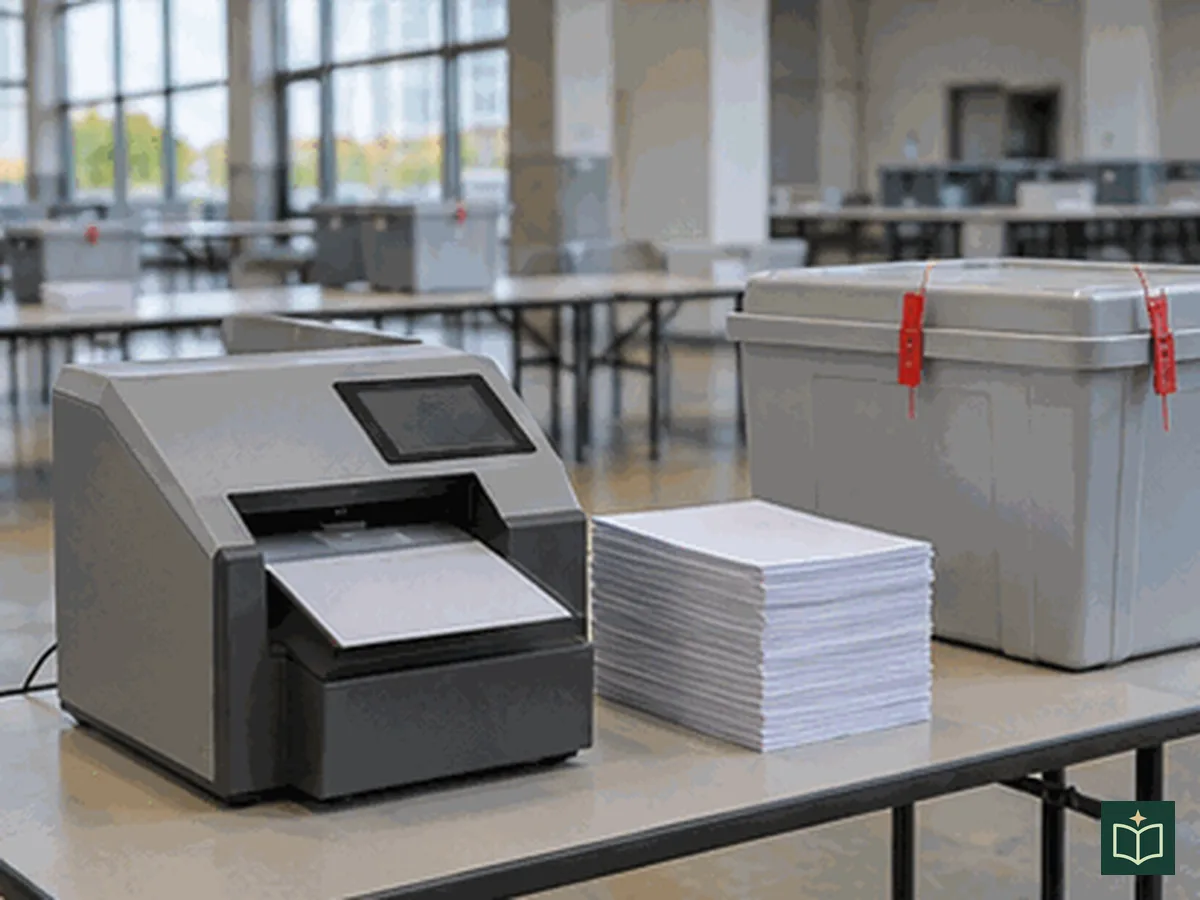
Electronic voting covers several quite different technologies. Some only count votes: voters mark a paper ballot by hand and an optical scanner reads it, as in much of the United States. Others record votes directly: voters press buttons or a touchscreen on a machine, which stores the choice electronically. A third type, ballot-marking devices, lets voters make choices on a screen and then prints a paper ballot, which is counted by a scanner. Finally, internet voting allows people to vote remotely from their own computers or phones. Each approach raises different questions about speed, accessibility, cost, security and, above all, how the result can be independently verified.
Large-scale examples
Several large democracies vote almost entirely on machines. Brazil introduced electronic voting machines in 1996 and used them nationwide from 2000, allowing results for well over 100 million voters to be announced within hours. India uses standalone electronic voting machines in all its national elections, a practice adopted across the country for the 2004 general election. Since 2019, every Indian machine has been paired with a printer that briefly shows the voter a paper slip of their choice, known as a voter-verifiable paper audit trail. These machines are not connected to the internet, a design choice intended to reduce the risk of remote interference.
Voting online
Estonia is the best-known example of internet voting. Since 2005 its citizens have been able to vote online in national and local elections using a state-issued digital identity card or mobile ID, and in the 2023 parliamentary election more than half of votes were cast that way. Voters can vote online several times during the advance period, with only the last vote counting, and can override an online vote by voting on paper. This design aims to protect against coercion. Most countries have been more cautious, because security experts warn that home devices and networks are difficult to secure and that online votes are hard to audit independently.
Paper trails and audits
A widely shared principle among election-security specialists is that every vote should have a durable record the voter can check, independent of software. With paper ballots or verified paper slips, officials can audit results by counting a sample by hand and comparing it with machine totals. Risk-limiting audits, increasingly used in the United States, draw random samples of ballots and keep checking until there is strong statistical evidence that the declared winner is correct, or until a full hand count is triggered. Pre-election testing of machines, sealed storage, chain-of-custody records and the presence of party and independent observers add further layers of protection.
Second thoughts
Not every country has kept electronic voting. The Netherlands stopped using voting computers in 2008 after researchers showed they could be tampered with and that their emissions might reveal voters' choices. In 2009 Germany's Federal Constitutional Court ruled that the machines used in a federal election had been unconstitutional, because ordinary citizens could not verify the essential steps of voting and counting without specialist knowledge. In the United States, problems with punch-card ballots in the 2000 presidential election led to large federal investment in new equipment, followed by a move back towards paper-based systems after concerns about touchscreen machines without paper records.
Why it matters
Electronic voting can deliver faster results, help voters with disabilities and reduce errors in complex ballots. But speed matters less than trust. An election must convince losing candidates and their supporters that they lost fairly, and that requires a process the public can understand and check. When reading about disputes over machines, useful questions include whether there is a paper record, whether audits are carried out and published, who tests and certifies the equipment, and whether observers can follow each step. Countries reach different answers, but the systems with the broadest confidence tend to combine technology for speed with paper for verification.
Sources & further reading
- US Election Assistance Commission ↗
- International IDEA · Elections ↗
- Estonian State Electoral Office ↗
Figures are rounded and widely published; check the linked organisations for the latest editions. These organisations do not endorse this website.