Two kinds of breakdown
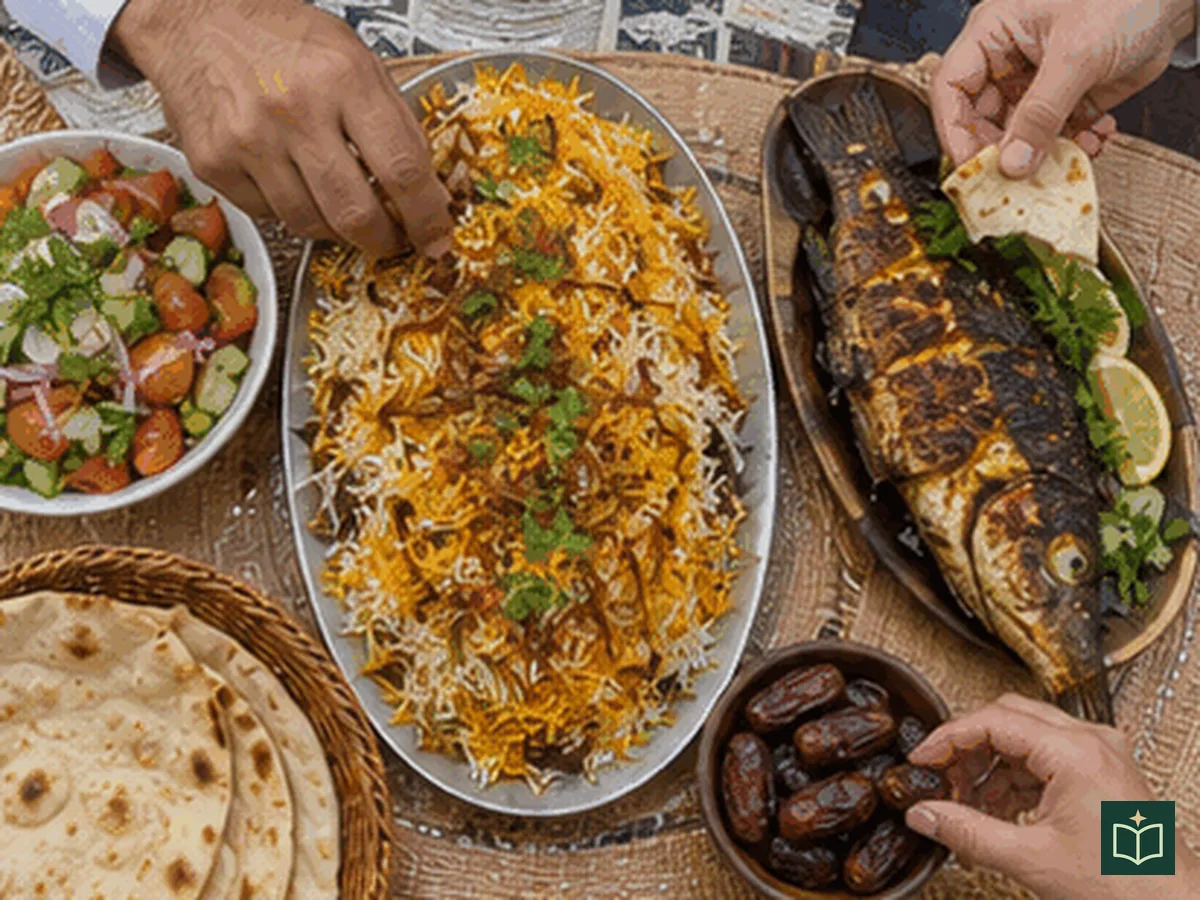
A meal cannot feed your cells as it is. Rice, bread, meat and dates are made of large molecules: starches, proteins and fats. To be absorbed, they must be broken into much smaller units, such as simple sugars, amino acids and fatty acids, that can pass through the lining of the gut into the blood. Digestion does this in two ways. Mechanical digestion physically breaks food into smaller pieces, by chewing and by the churning of muscular walls. Chemical digestion uses enzymes and acid to cut the chemical bonds that hold large molecules together. The two work along a tube several metres long, from the mouth to the exit.
Mouth and oesophagus
Digestion begins before you swallow. Teeth cut and grind food, increasing its surface area so enzymes can work faster. Salivary glands produce saliva, often between one and one and a half litres a day, which moistens food and contains amylase, an enzyme that starts breaking starch into sugars. That is why bread chewed for a long time begins to taste slightly sweet. The tongue shapes the food into a soft ball and pushes it to the back of the throat. Swallowing closes off the airway and passes food into the oesophagus, a muscular tube that moves it to the stomach in waves of contraction called peristalsis, in a few seconds.
The stomach
The stomach is a stretchy, muscular bag that can expand to hold a large meal. Its lining secretes hydrochloric acid, making its contents strongly acidic, with a pH typically between about 1.5 and 3.5. The acid kills many microbes and unfolds proteins, and an enzyme called pepsin begins cutting them into shorter chains. A thick layer of mucus protects the stomach wall from digesting itself. Powerful muscle contractions churn the food with these juices for several hours, turning it into a thick, soupy mixture called chyme. A ring of muscle at the exit, the pyloric sphincter, releases chyme into the small intestine a little at a time.
The small intestine does most of the work
The small intestine is the main site of chemical digestion and absorption. In an adult it is several metres long, often given as around six metres. As chyme enters, the pancreas releases juice rich in bicarbonate to neutralise the acid, along with enzymes that digest starch, protein and fat. Bile from the liver breaks fat into tiny droplets so that enzymes can reach it. The inner wall is folded and covered with finger-like villi, each bearing microscopic microvilli. Older textbooks compared its absorbing area to a tennis court; more recent measurements suggest about 30 square metres, still roughly the floor area of a small flat.
The large intestine and its microbes
By the time the remaining material reaches the large intestine, most nutrients have been absorbed. The large intestine, about one and a half metres long, reclaims much of the remaining water and salts, turning liquid waste into firmer stool. It is also home to the largest community of microbes in the body, trillions of bacteria, roughly as many as the body's own cells. These microbes ferment fibre that human enzymes cannot digest, producing short-chain fatty acids that nourish the cells of the colon, along with some vitamins and gases. The waste that remains is stored in the rectum until it leaves the body. Total transit time is typically one to three days.
Signals, speed and good habits
Digestion is coordinated by nerves and hormones. The sight and smell of food prompt saliva and stomach acid. Hormones released by the intestine slow stomach emptying, trigger the release of bile and pancreatic juice and signal fullness to the brain, which is one reason eating slowly can help people notice when they have had enough. Fibre from vegetables, fruit, legumes and whole grains keeps material moving and feeds gut microbes, and adequate water intake matters, especially in a hot climate. Persistent changes in digestion, such as ongoing pain, unexplained weight loss, blood in stool or lasting changes in bowel habits, are reasons to consult a doctor.
Sources & further reading
Figures are rounded and widely published; check the linked organisations for the latest editions. These organisations do not endorse this website.