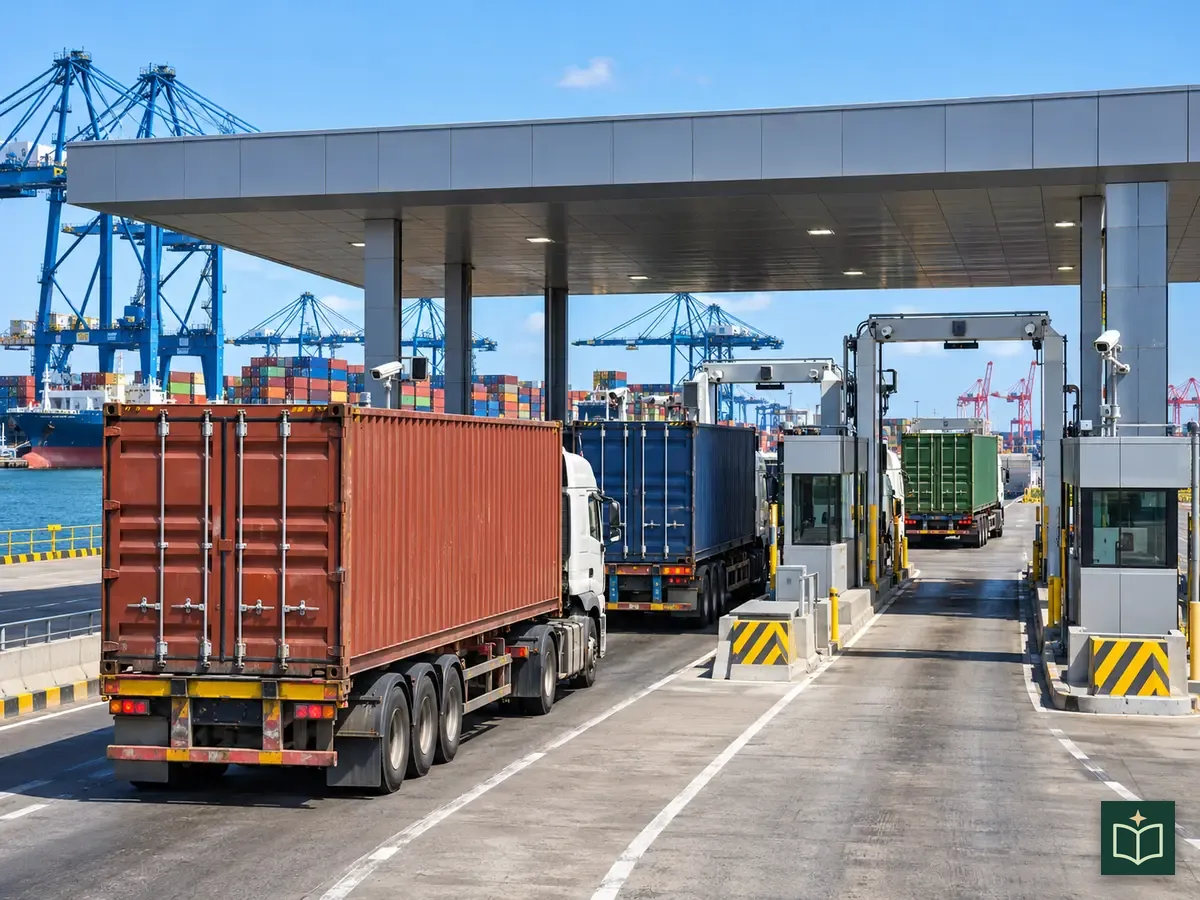
A ladder of integration
In 1961, the economist Béla Balassa described regional economic integration as a series of stages, each deeper than the last. The model remains a useful way to understand trade blocs, even though real arrangements rarely fit neatly into one category. The stages are, broadly, a free trade area, a customs union, a common market, an economic union and, at the most integrated level, full economic and political integration. Each step removes more barriers to exchange between members but also requires them to agree more common rules. Global trade rules under the World Trade Organization permit such regional arrangements as an exception to equal treatment, provided they cover substantially all trade.
Free trade areas
In a free trade area, members eliminate tariffs and quotas on most goods traded among themselves, but each keeps its own tariffs on imports from outside the bloc. This creates a practical problem: an exporter outside the area might ship goods through the member with the lowest external tariff to reach the others. To prevent this, free trade agreements include rules of origin, which specify how much of a product must be made within the area to qualify for tariff-free treatment. The North American agreement between the United States, Mexico and Canada is a well-known example. Bilateral free trade agreements, such as the comprehensive economic partnership agreements the UAE has signed with numerous countries since 2022, follow the same logic.
Customs unions
A customs union goes further. Members not only trade freely among themselves but also adopt a common external tariff and a joint trade policy, so goods entering anywhere in the union face the same duties. Once goods have cleared customs at the external border, they can generally circulate freely, reducing the need for rules of origin inside the bloc. The trade-off is that members can no longer set tariffs or negotiate trade deals independently; those decisions must be made collectively. The European Union operates a customs union, completed by its founding members in 1968, and the Gulf Cooperation Council launched its own customs union in 2003.
Common markets and economic unions
A common market adds free movement of the factors of production: labour, capital and often services. Workers can take jobs in other member states, companies can invest freely and professionals can offer services across borders, which requires agreement on standards, qualifications and regulations. The European single market is the most developed example, and the GCC declared a common market in 2008 aiming at equal treatment for its citizens. An economic union adds coordination or unification of economic policies, such as competition rules and fiscal frameworks. A monetary union, like the euro area, shares a single currency and central bank, the deepest form of economic integration short of political union.
Common misconceptions
People often use free trade agreement and single market interchangeably, but they are very different. A free trade agreement can remove tariffs while leaving regulatory differences, border checks and separate trade policies intact. Membership of a single market typically requires following common rules on product standards and accepting decisions by shared institutions. Another misconception is that the ladder must be climbed in order or to the top. Many blocs deliberately stop at a free trade area to preserve national control over trade policy, and some combine elements of different stages. Trade agreements also increasingly cover services, investment, digital trade and government procurement, going beyond tariffs.
Why it matters
Understanding the stages helps explain debates about trade agreements. A country weighing a customs union must decide whether access to a larger market is worth losing control of its own tariffs and trade negotiations. A country considering a common market must consider immigration, regulation and the role of shared courts. For businesses, the type of agreement determines practical matters such as which paperwork is needed at borders, whether rules-of-origin certificates apply and what standards products must meet. This explainer is educational and does not assess any particular agreement; for specific trade decisions, companies typically consult customs authorities and trade specialists.
Sources & further reading
Figures are rounded and widely published; check the linked organisations for the latest editions. These organisations do not endorse this website.