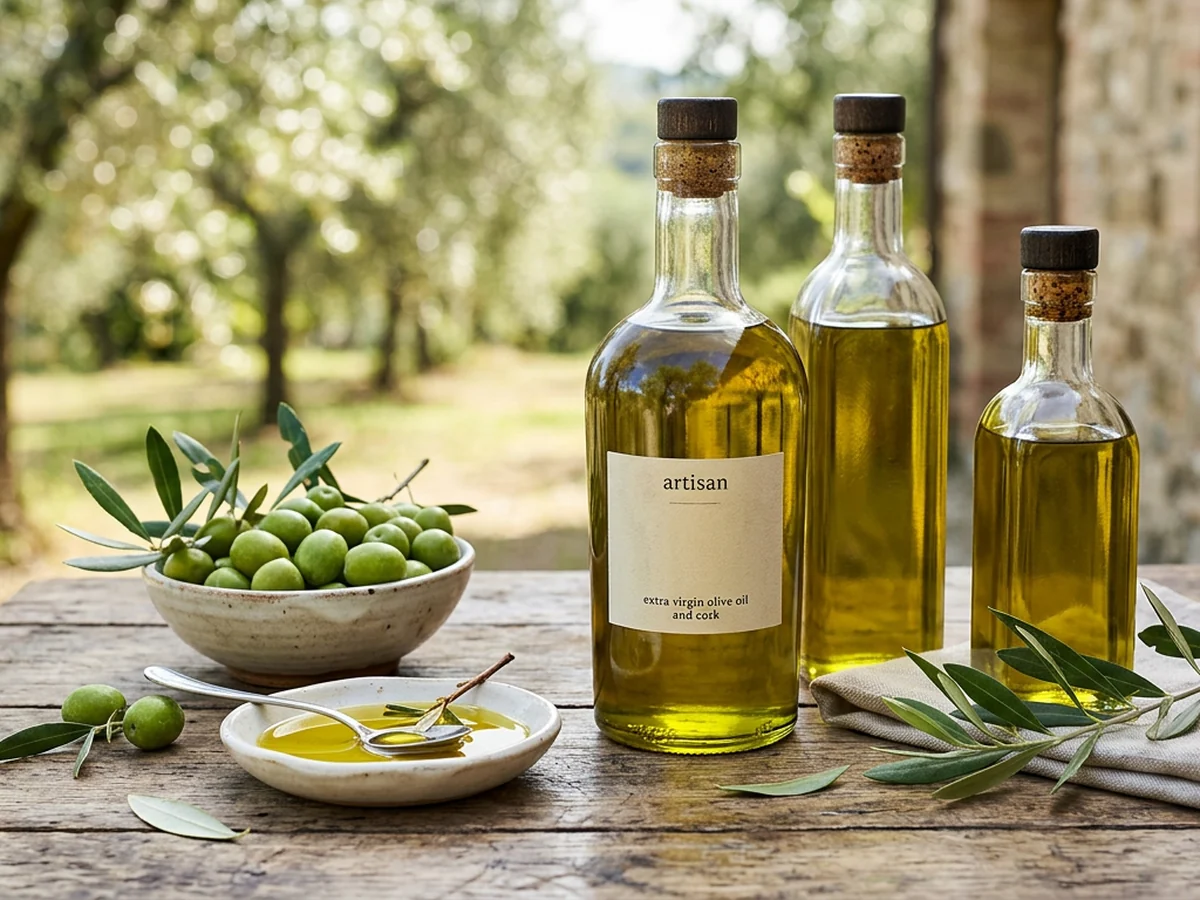
How extra virgin is made
Olives are washed, crushed into a paste and spun to separate the oil, all at controlled temperatures. No chemicals or high heat are used. Tasting panels check for fruitiness and absence of defects.
Refined olive oil
Oil with defects or high acidity can be refined using heat and filters to remove flavours and odours. The result is neutral, so producers add some virgin oil back for taste and sell it as 'olive oil' or 'pure olive oil'.
Flavour and nutrition
Extra virgin olive oil keeps polyphenols, antioxidants responsible for its peppery bite and some of its health benefits. Refining strips most of these away.
Cooking
Contrary to a common myth, good extra virgin olive oil is stable enough for most home cooking, including frying. Refined olive oil has a higher smoke point and a milder taste, useful when you do not want an olive flavour.
Sources & further reading
Standards vary slightly between regulators. Photograph: original AI-generated illustration (Adobe Firefly). Reference organisations do not endorse this website.