What it is
In most democracies voting is a right that citizens may choose not to use. In a smaller group of countries, the law also makes it a duty. Compulsory voting requires eligible citizens to enrol and to attend a polling place, or vote by post, at elections. Around two dozen countries have such laws, though only some enforce them. Well-known examples include Australia, Belgium, Luxembourg, Brazil, Argentina, Peru, Uruguay and Singapore. The secret ballot still applies everywhere. Officials can see who has received a ballot paper, but not how it was marked, so voters may still leave it blank or spoil it if they wish.
How it is enforced
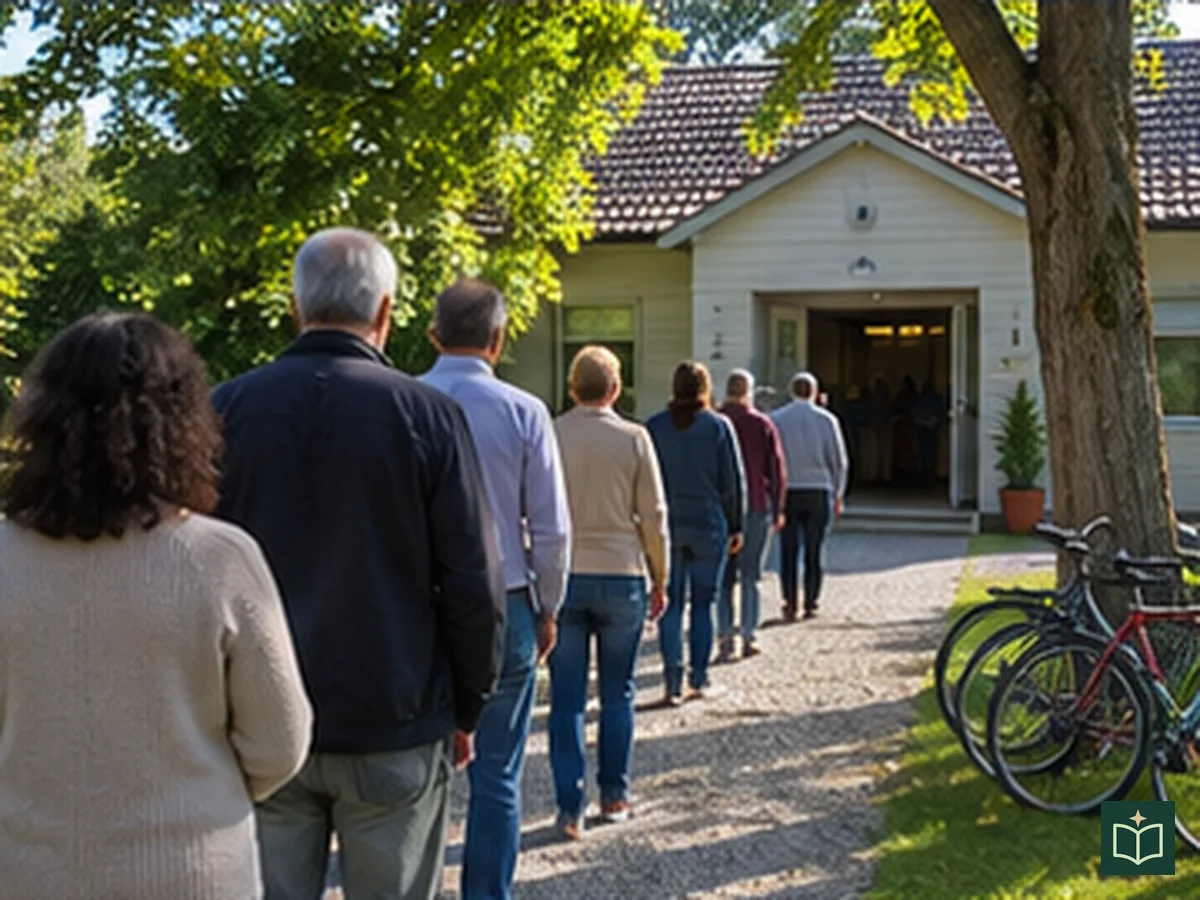
Enforcement usually starts with the electoral roll. After an election, officials compare the list of people marked as having voted with the roll and send notices to those who did not. Voters can give a valid reason, such as illness, travel or religious objection. Otherwise they pay a modest penalty. In Australia, the administrative penalty for a federal election is small, around 20 Australian dollars, though unpaid fines can lead to court. Brazil links voting records to everyday administration, so non-voters who do not justify their absence may face difficulty obtaining passports or some public jobs. In Singapore, non-voters are removed from the register until they apply for restoration.
What happens to turnout
Compulsory voting tends to produce turnout far above that of voluntary systems. Australia offers a clear illustration. In the 1922 federal election, before voting became compulsory, turnout was below 60 per cent. Compulsory voting was introduced in 1924, and at the next election, in 1925, turnout exceeded 90 per cent, where it has broadly stayed. To see the scale, imagine an electorate of 10 million people. At 60 per cent turnout, 6 million vote; at 90 per cent, 9 million vote, adding 3 million voices. The extra voters are disproportionately young, poorer or less interested in politics, groups that otherwise vote less often.
History and changes
Belgium introduced compulsory voting for men in 1893, and it remains in place for national elections there. Many Latin American countries adopted it in the twentieth century, often alongside wider suffrage. Some countries have abandoned it. The Netherlands ended compulsory attendance in 1970, and turnout fell noticeably afterwards. Chile moved from compulsory to voluntary voting in 2012 and later reinstated the obligation after a decade of noticeably lower participation. Rules can also vary within a country or by age group. In Brazil, voting is compulsory for literate citizens aged 18 to 70 but optional for those aged 16 and 17 and those over 70.
Arguments for and against
Supporters argue that compulsory voting makes election results reflect the whole population rather than only the most motivated, reduces the advantage of well-funded turnout operations and encourages parties to appeal to the political centre. It also simplifies administration, since authorities plan for near-universal participation. Critics argue that a free society should not compel political participation and that requiring uninterested people to vote may increase random or blank votes, known as donkey votes in Australia. Some point out that enforcement can be uneven and that fines fall hardest on poorer citizens. Evidence on wider effects, such as on policy outcomes, is mixed and continues to be studied.
Why it matters
Turnout figures are not directly comparable between countries with compulsory and voluntary voting. A turnout of 70 per cent might be high in one system and low in another. Compulsory voting also changes how campaigns are fought. Parties spend less effort persuading supporters to show up and more on persuading undecided voters, and election administrators must make voting easy enough to justify the obligation, through early voting, postal ballots and weekend elections. When comparing participation across democracies, the first question to ask is whether voting is voluntary, compulsory in law only, or compulsory and actively enforced, since each produces a different picture.
Sources & further reading
Figures are rounded and widely published; check the linked organisations for the latest editions. These organisations do not endorse this website.