Energy locked in metal
Aluminium is abundant in Earth's crust but stubbornly bonded to oxygen. Freeing it from refined ore takes huge amounts of electricity in smelters, which is why aluminium is sometimes described as solid electricity. Once made, however, the metal does not need to be separated from oxygen again. Melting old aluminium only requires heating it to about 660 °C, its melting point, and a little more for handling. Industry bodies estimate that recycling uses around 5% of the energy of primary production, saving about 95%, along with the mining of bauxite and the greenhouse gases of smelting. That large gap is the economic engine behind can recycling.
From bin to bale
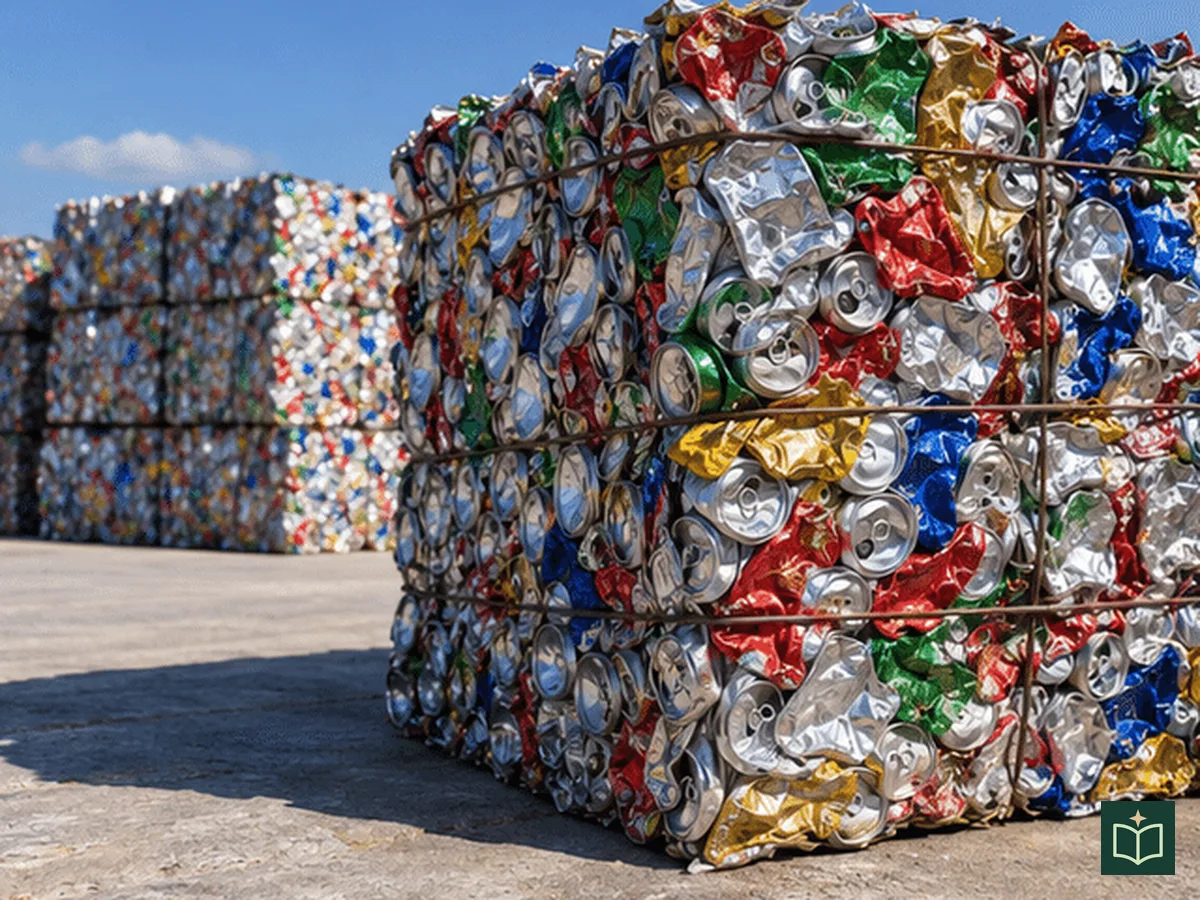
A used can first has to be caught. In kerbside systems, cans travel to sorting plants where eddy-current separators, rotating magnets that repel non-magnetic metals, flick them out of the stream. In deposit-return systems, people return cans to machines or shops for a small refund, giving cleaner material. Cans are crushed into dense bales and sold to remelters. Because the scrap is valuable, collectors, informal pickers and charities have long sought out cans, and in many countries they are the most valuable item in household recycling. Collection is the weakest link, though: a can thrown into general waste is usually lost to landfill or incineration.
Shred, de-coat, melt
At the recycling plant, bales are shredded into small flakes, and magnets and air separators remove steel, plastics and dirt. The flakes then pass through a de-coating kiln at around 500 °C, which burns off printed paint, internal lacquer and any drink residues; the gases released can help fuel the process. The clean flakes are melted in large furnaces, where a layer of oxide called dross is skimmed off, a small but unavoidable loss. Chemists sample the melt and adjust its composition, then cast it into ingots weighing many tonnes. These are rolled hot and cold into thin coil and sent to can makers.
Why the loop stays closed
Most recycled metals end up in lower-grade products, because mixed scrap is hard to purify. Cans are different. Every can body is made from a similar manganese-magnesium alloy, and the lids from a related alloy richer in magnesium. Melted together, they produce metal close to body-sheet specification, needing only modest adjustment. Cans are thin, light and short-lived, often back at the smelter within months, so the same metal can circulate many times. The industry says a recycled can may be back on the shelf in as little as about 60 days. Few packages, and few metal products of any kind, return to exactly their original use so directly.
What it saves
Take a can weighing about 15 grams, so that a tonne of cans holds about 1,000,000 ÷ 15, or roughly 66,700 cans. Smelting a tonne of new aluminium takes around 14,000 kilowatt-hours of electricity in the smelter alone. Saving 95% of that is about 13,300 kilowatt-hours a tonne, or roughly 0.2 kilowatt-hours per can. These are illustrative figures, and the full savings are larger once bauxite mining and alumina refining are counted. For energy-intensive aluminium producers in the Gulf, where smelters rank among the region's largest electricity users, every tonne of recycled metal that displaces new metal is an efficient way to cut energy use and emissions.
Limits and gaps
Aluminium is often called infinitely recyclable, and it is true that the metal does not degrade when remelted. But each cycle loses a little to dross, and cans that are never collected cannot be recycled at all. Recycling rates vary widely. Brazil has long recovered nearly all its cans, many European countries with deposit schemes return more than nine in ten, and the United States recovers less than half. Plastic sleeves, mixed alloys and contamination make processing harder. The lesson for consumers is straightforward: empty cans, keep them out of general waste and use deposit or recycling points where available. The loop works only if the can actually enters it.
Sources & further reading
Figures are rounded and widely published; check the linked organisations for the latest editions. These organisations do not endorse this website.