
From seawater
to your tap.
Turn a handle. A city’s worth of engineering answers.
Follow the journey that makes fresh water possible beside a salty sea.
The coastline offers water in abundance. The obstacle is what is dissolved in it. Desalination separates water from salts; a complete water service then treats, stores, moves and monitors that water.
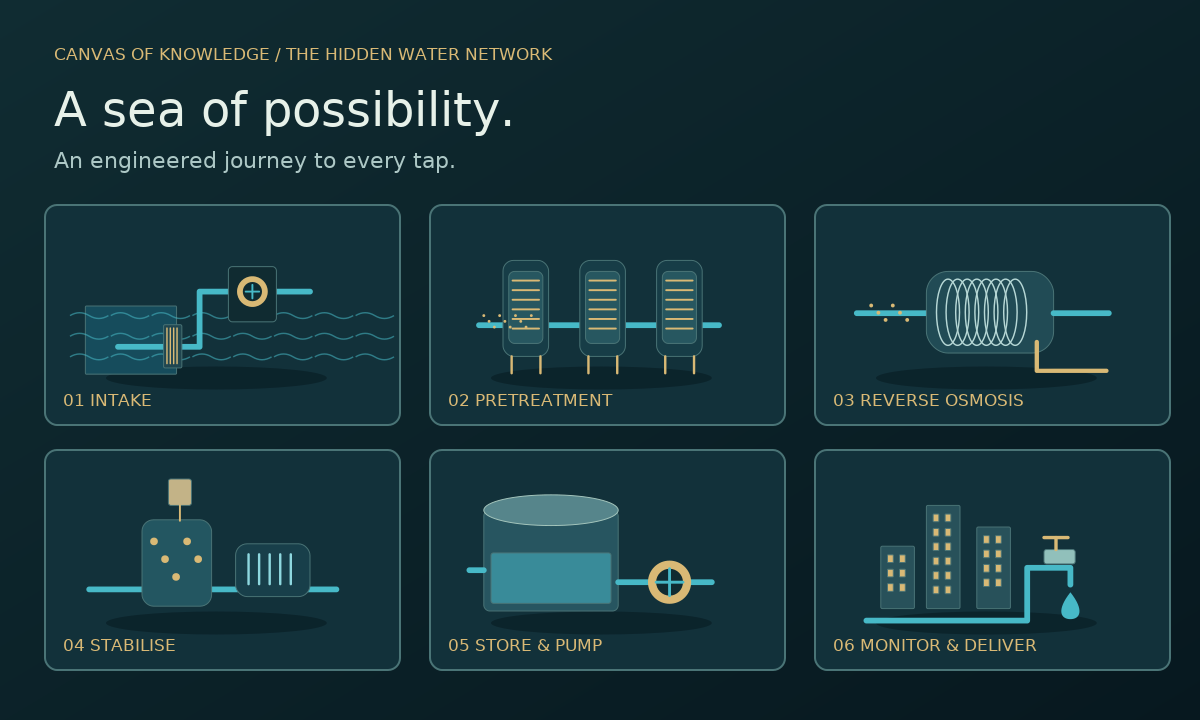
The sea is the starting point.
Seawater enters through an intake. Screens intercept larger debris before the water reaches more sensitive equipment. Intake design also has to consider marine life and local seawater conditions. [1]
The challenge: collect a reliable feed without treating the sea as an unlimited waste sink.
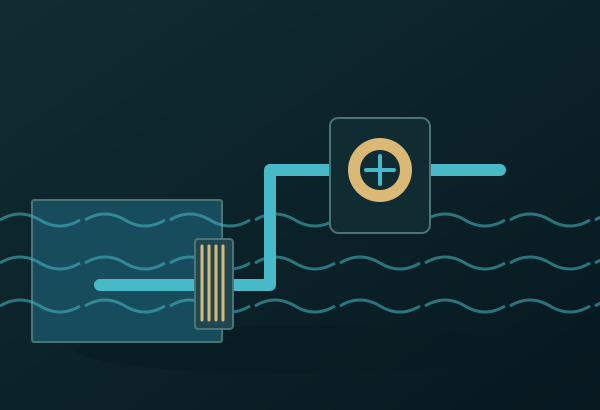
Protect the membrane first.
Fine particles, biological material and deposits can foul a membrane or obstruct its flow channels. Pretreatment reduces those burdens; the exact combination of clarification, filtration and chemical conditioning depends on the feed water. [2]
An ordinary filter removes particles. Dissolved salt needs a different separation step.
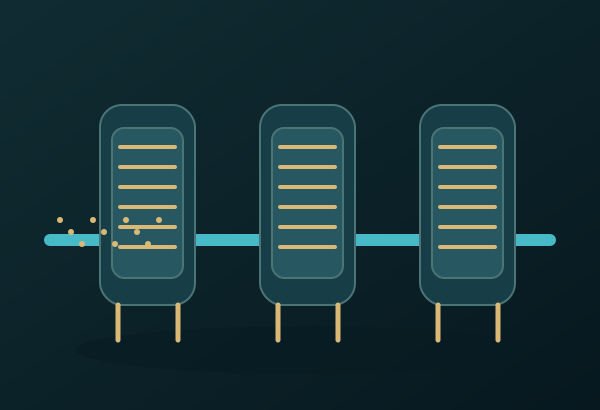
Pressure changes the direction.
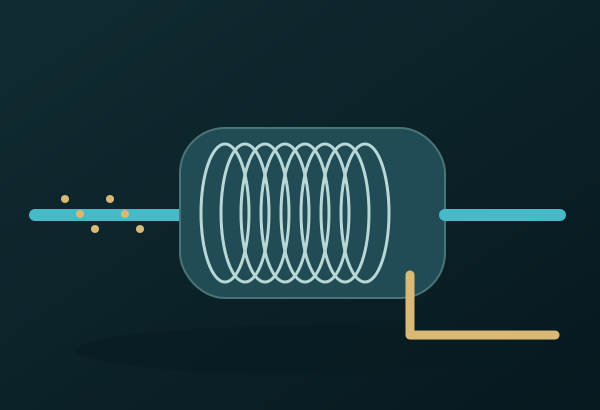
High-pressure pumps drive water through a selective membrane. Most dissolved salts stay in the concentrate stream while lower-salinity water, called permeate, is collected. The membrane is a separation barrier, not a screen with visible salt-sized holes. [1]
Two streams leave the process: permeate and a saltier concentrate.
Fresh is not the same as finished.
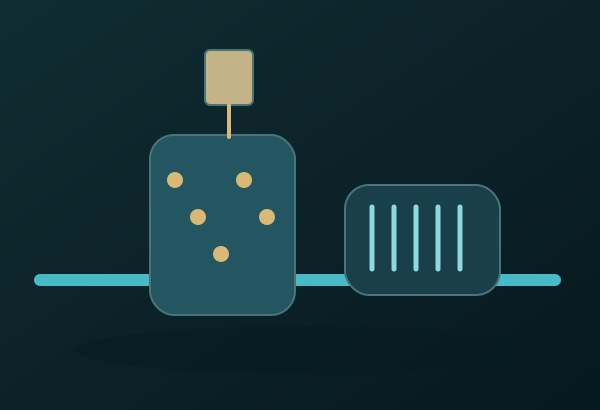
Water emerging from desalination has very little mineral content and can be corrosive to pipes. Post-treatment adjusts its mineral balance and chemistry. Disinfection and wider quality controls remain part of producing water suitable for the supply network. [3]
Removing salt is one treatment task; preparing water for distribution is another.
Build a buffer into the system.
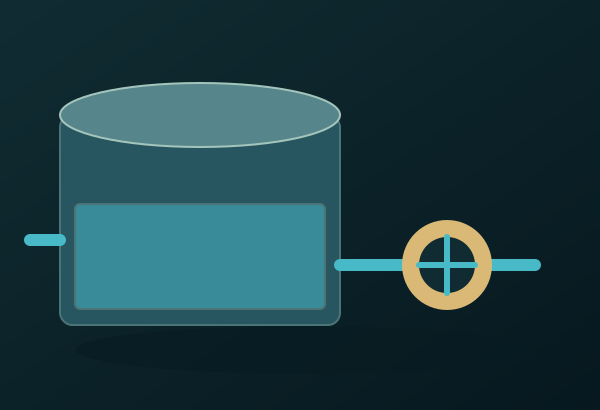
Reservoirs separate the rhythm of water production from the changing demands of a city. Pumps and transmission mains carry treated water onwards; distribution pipes bring it into neighbourhoods. [7]
Storage adds resilience. It is an essential part of the system, not an afterthought.

The journey continues underground.
Water quality must be managed beyond the plant gate. In Dubai, DEWA describes sampling at reservoirs and fixed network points, alongside continuous monitoring. Building storage and plumbing form the final part of the journey to a tap. [6]
A functioning water service depends on treatment, maintenance and monitoring together.
The salt does not disappear.
A membrane produces fresh water by separating streams. It leaves a smaller, more concentrated stream that still needs careful management.
 Open full-size infographic ↗
Read recovery as a ratio.
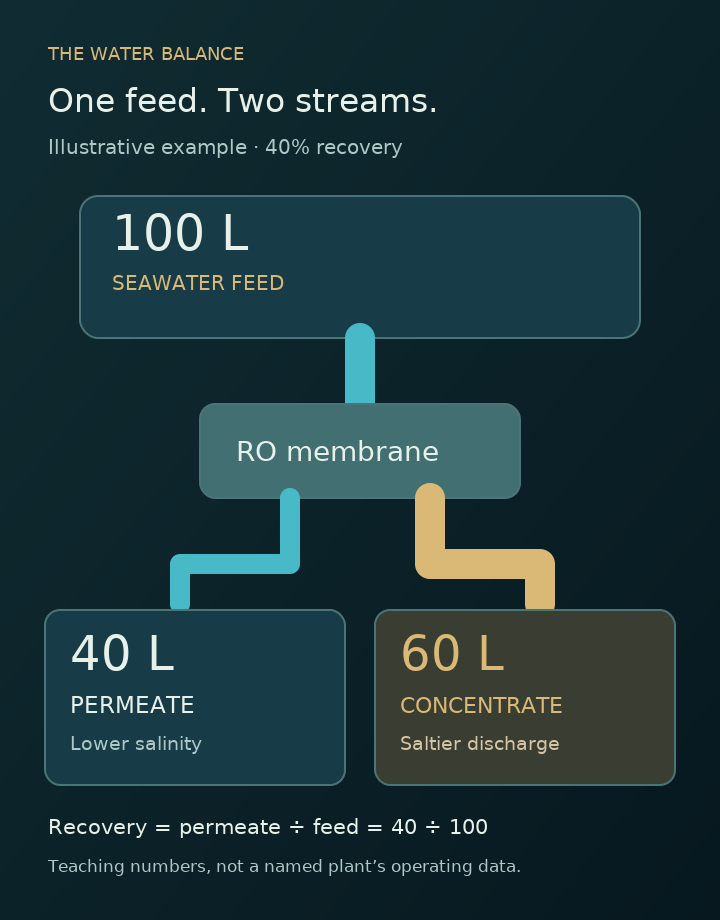
Recovery is the fraction of feed water collected as permeate. Our diagram uses an illustrative 40% recovery: 100 litres in, 40 litres of permeate and 60 litres of concentrate. These are teaching numbers, not operating data from a UAE plant.
Assume the membrane retains nearly all the incoming salt and ignore small volume changes. Concentrate salinity would then be roughly 100 ÷ 60, or 1.67 times the feed salinity. Actual plants have salt passage, additional streams and site-specific conditions.
Pressure is worth recovering.
The concentrate can leave an RO stage still under pressure. An energy-recovery device transfers some of that pressure energy to incoming seawater, reducing the work required from the pump. DEWA describes this arrangement at Jebel Ali’s K-Station. It recovers energy, not the lost freshwater fraction. [5]
The outlet matters too.
Concentrated discharge changes the conditions near an outfall. Its management requires attention to local mixing and water chemistry. DEWA describes testing intake and brine-discharge samples for physical, chemical and microbiological parameters. [8]
Infrastructure built for a dry coast.
Engineering responds to the sea.
At Jebel Ali’s K-Station, DEWA’s 2021 description highlights dissolved-air flotation before desalination and a two-pass RO system. Pretreatment helps manage difficult feed conditions, including periods of high suspended material. This is one documented example, not a claim that every UAE plant has the same design. [5]
A reservoir is part of the technology.
DEWA announced the commissioning of its Enkhali reservoir in 2024. The point extends beyond one project: reliable supply requires places to hold treated water as well as plants that produce it. Reservoirs, mains, pumps and laboratories belong in the same picture. [7]
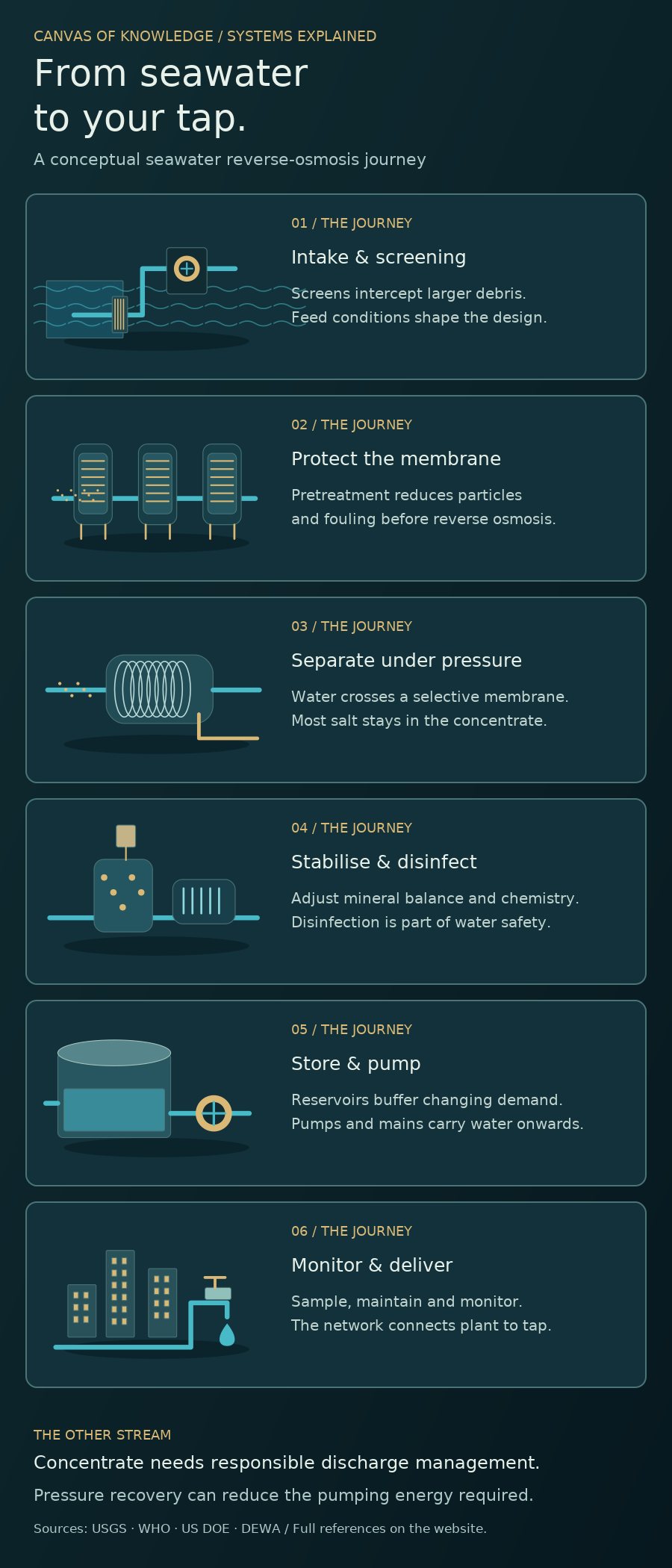
One poster. Six stages.
Download the complete vector guide, with selectable text and no blurry raster labels.
Sources & method
Original writing and illustrations by Canvas of Knowledge. Sources checked 18 November 2026. The balance diagram is explicitly assumed arithmetic, not a plant performance claim. WHO’s desalination guidance treats water safety as a whole-system task. [4]
- USGS · Desalination ↗
Salt removal, distillation and membrane separation.
- US Department of Energy · Reverse osmosis optimisation ↗
Pretreatment, fouling and energy use.
- WHO · Drinking-water quality guidelines ↗
Stabilisation and remineralisation of desalinated water before distribution.
- WHO · Safe drinking-water from desalination ↗
Risk management from source water through treatment and delivery.
- DEWA · Jebel Ali K-Station engineering ↗
2021 engineering description: pretreatment, two-pass RO and pressure recovery. Historical example, not current capacity data.
- DEWA · Water laboratory and network sampling ↗
How reservoir and network samples support water-quality monitoring.
- DEWA · Enkhali reservoir ↗
2024 reservoir commissioning and the role of water storage.
- DEWA · Water quality and brine monitoring ↗
Monitoring intake and discharge water, including salinity and chemical parameters.