
Work with water.
Desert channels, river diversions, stepwells and reservoirs turn a changing resource into a shared system.
 ILLUSTRATED RECONSTRUCTION · ROME
Engineering before the modern age.
They channelled rivers, carved cities into rock and set the sky in motion with bronze. Eight encounters with the extraordinary intelligence of the past.
Discover the eight stories ↓The spectacular part is what survives. The deeper story is how people worked with water, stone, gravity and time—and how communities kept those systems working.
Each chapter pairs a realistic reconstruction with a focused essay, three key facts and sources you can follow. The pictures invite you in; the evidence helps you look closer.
Desert channels, river diversions, stepwells and reservoirs turn a changing resource into a shared system.
Build upward, carve downward, or assemble islands. Material, labour and geometry shape the possibilities.
Bronze gears carry astronomical cycles. A small object can contain an enormous intellectual world.
Open a story to see its full illustrated poster and the engineering behind the scene. Every poster is available to download.
8 visual stories
 13ILLUSTRATED RECONSTRUCTION
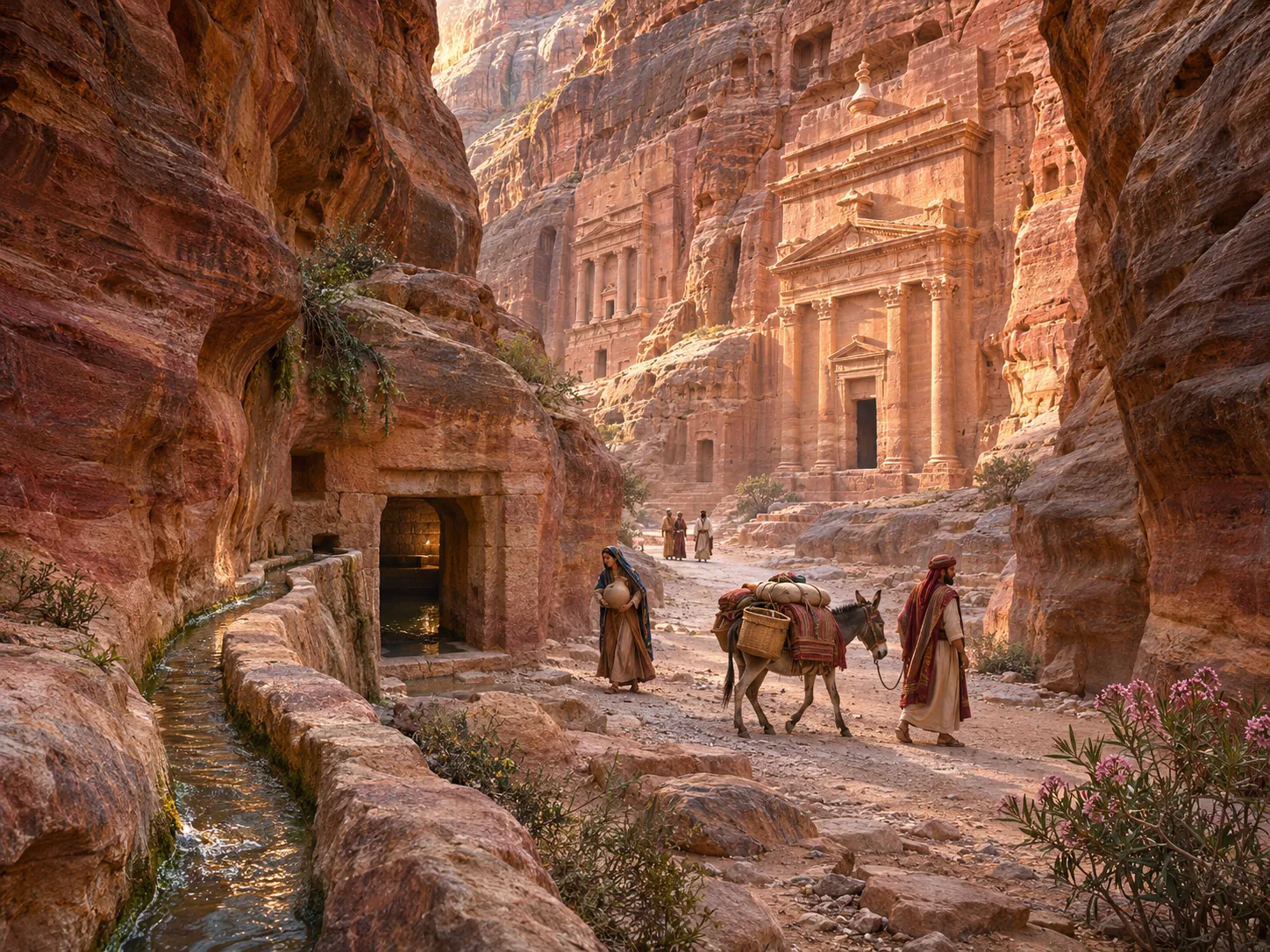
Petra’s carved façades are spectacular. Its less visible achievement was making a demanding landscape habitable. Channels, tunnels, dams and cisterns turned irregular water into an urban resource—and diverted dangerous floodwater away from important routes. Behind the rose-red monuments lies a story of storage, maintenance and the engineering of scarcity.
Petra’s water infrastructure combined diversion dams, rock-cut tunnels, channels, reservoirs and cisterns: supplying the city also meant controlling floods.
Explore the illustrated story ↗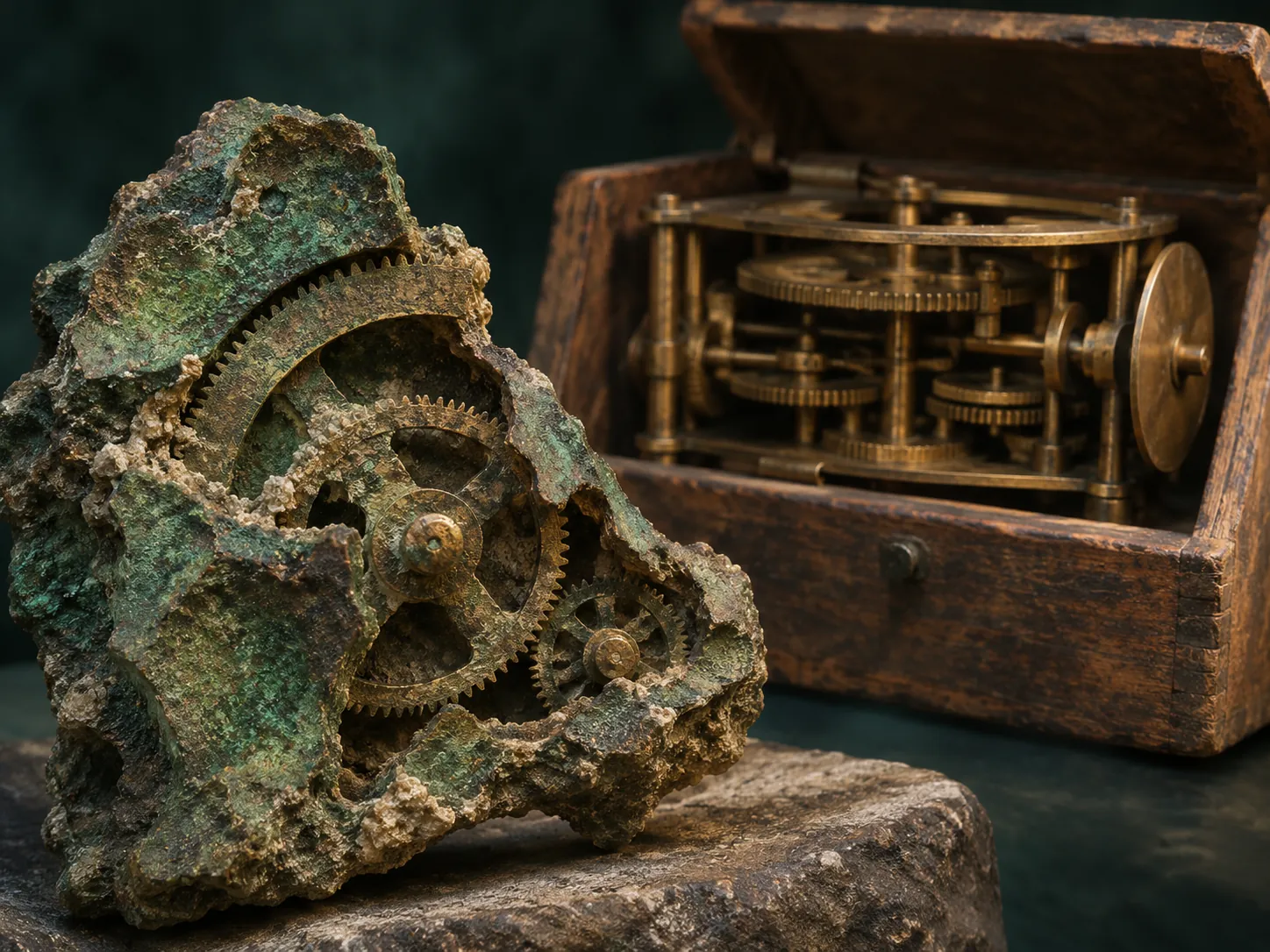 14ILLUSTRATED RECONSTRUCTION
A corroded object recovered from a shipwreck changed what historians thought ancient instrument makers could achieve. The Antikythera Mechanism translated astronomical cycles into coordinated mechanical motion. Its surviving gears and inscriptions reveal a portable calculator for the heavens—and a demanding puzzle whose missing parts still matter.
The mechanism survives in 82 fragments with about 30 bronze gears; only around a third of the original device remains.
Explore the illustrated story ↗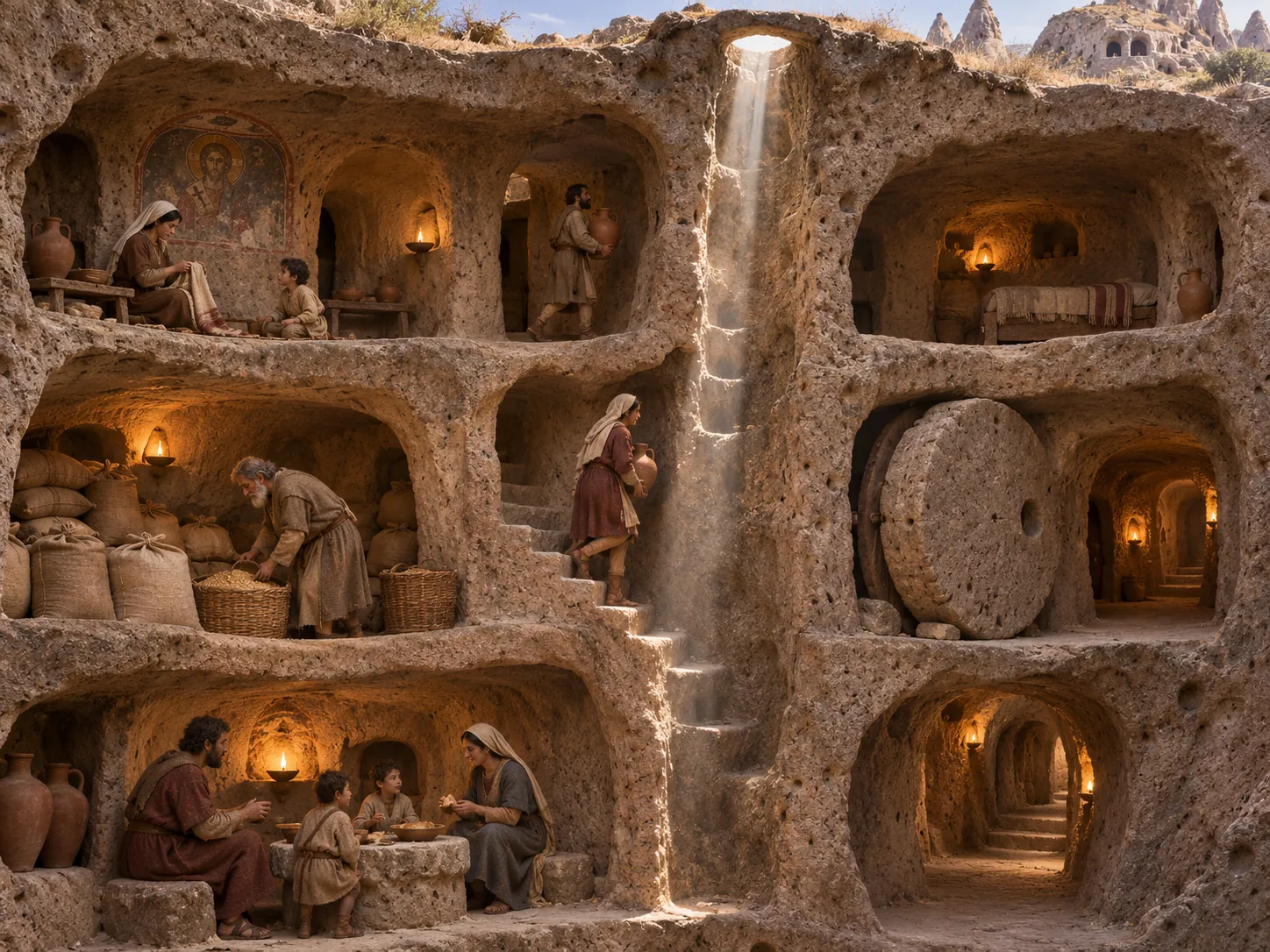 15ILLUSTRATED RECONSTRUCTION
Beneath Cappadocia lies an extraordinary answer to insecurity: passages, rooms, stores, wells and places of worship excavated into the ground. Derinkuyu’s spectacle is not simply its depth. It is the coordination of essential needs in an enclosed environment—and the unanswered questions that remain about when its many spaces were first made.
The Cappadocia Area Presidency describes Derinkuyu as approximately 85 metres deep, with rooms for storage, worship and other functions linked by underground passages.
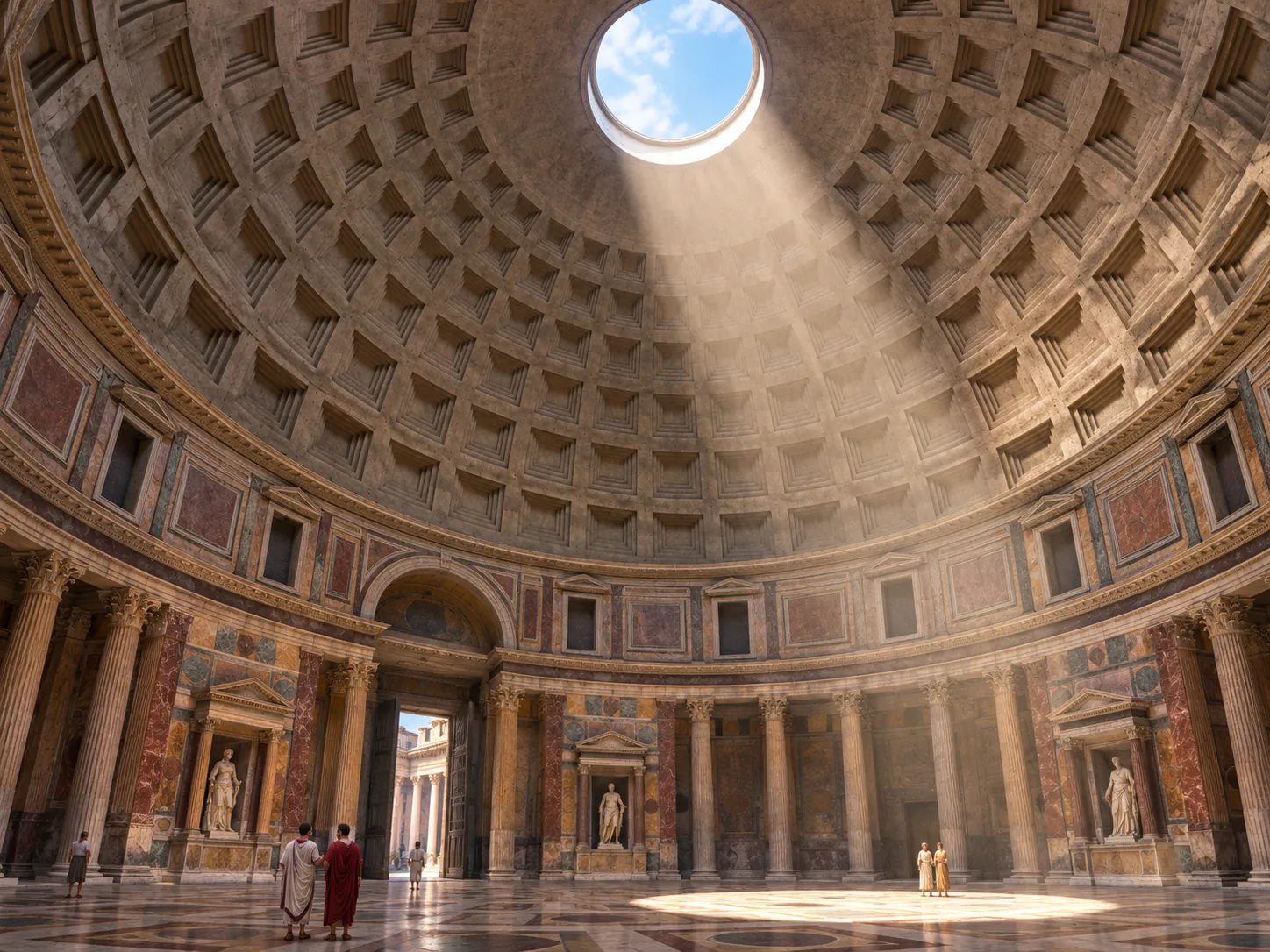
Explore the illustrated story ↗16ILLUSTRATED RECONSTRUCTIONStand inside the Pantheon and the building seems almost effortless: a vast circular room, a coffered dome and a moving patch of daylight. The appearance conceals a difficult structural problem. Roman builders coordinated heavy supporting walls, changing materials and a carefully shaped roof to create an interior whose scale still commands attention.
Italy’s Ministry of Culture gives the Pantheon’s interior diameter as 43.30 metres—approximately equal to the height from the floor to the dome’s crown.
Explore the illustrated story ↗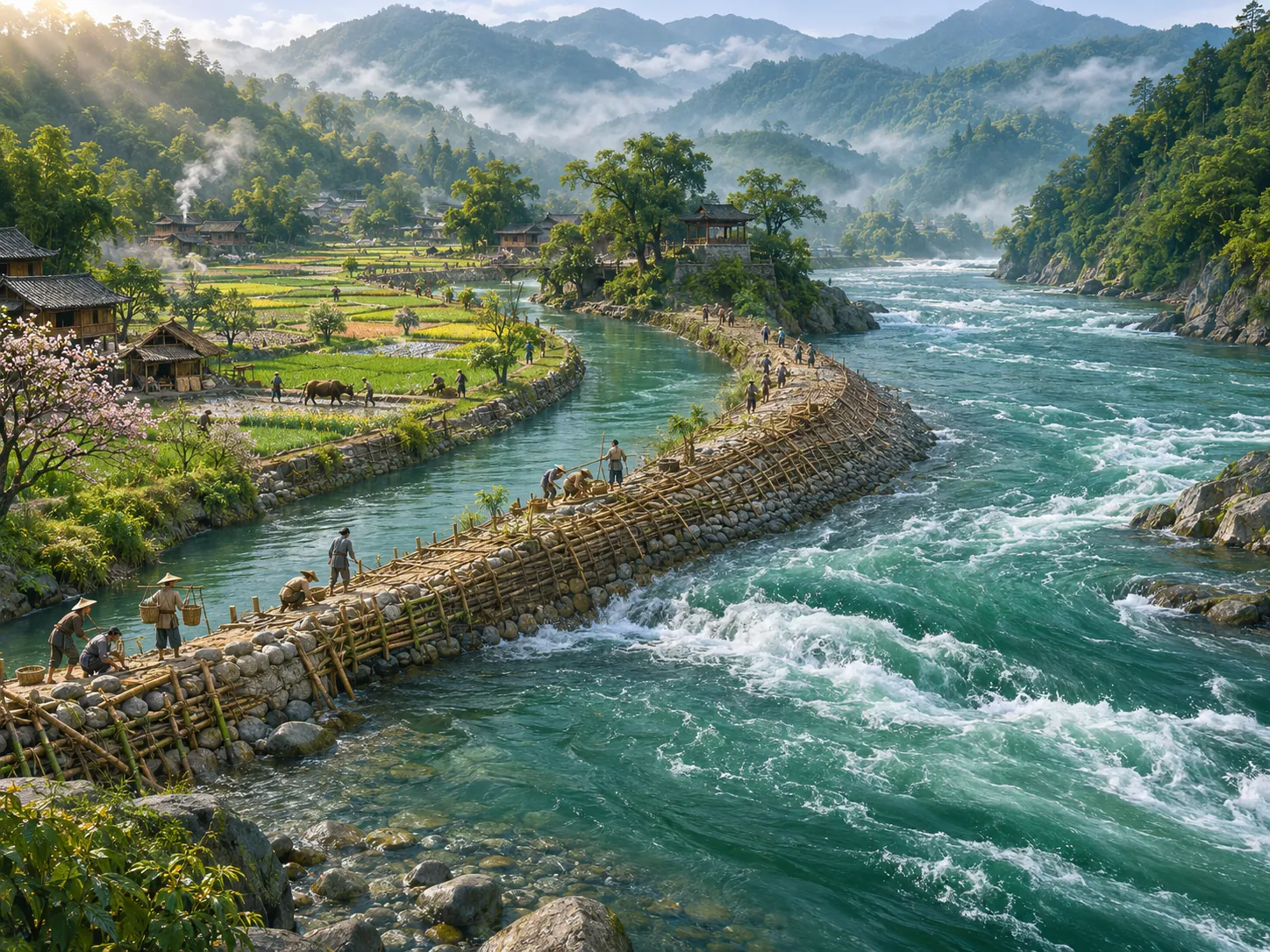 17ILLUSTRATED RECONSTRUCTION
A river carries more than water: it carries sediment, seasonal force and the possibility of a flood. At Dujiangyan, builders used the shape of the landscape to separate and redirect those movements. Begun in the third century BCE and repeatedly renewed, this irrigation system makes an extraordinary argument for engineering that works with a river’s behaviour.
Three linked headworks divide the river, release excess water and sediment, and control the supply reaching the Chengdu plain.
Explore the illustrated story ↗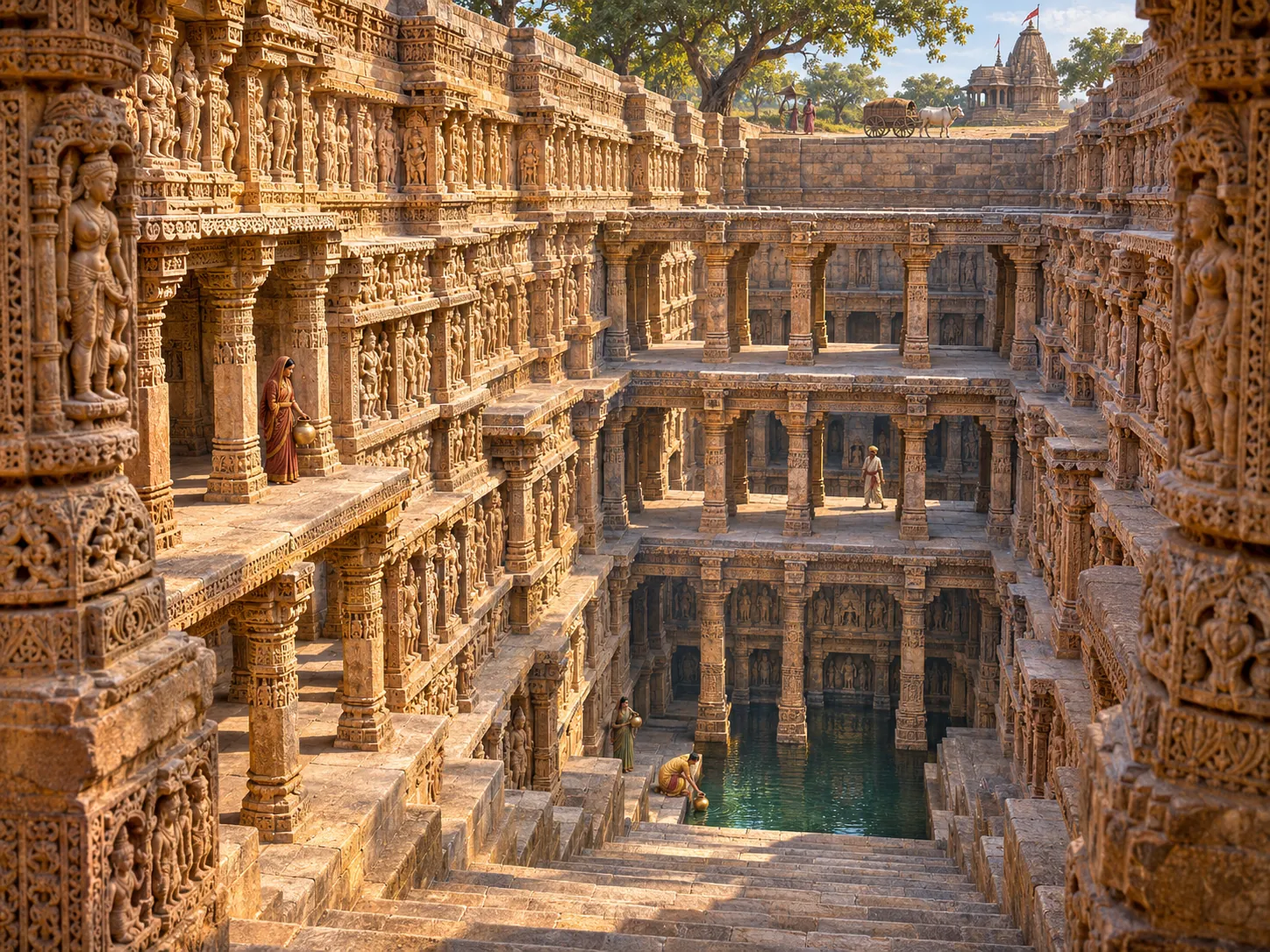 18ILLUSTRATED RECONSTRUCTION
Some buildings announce themselves by rising above a city. Rani-ki-Vav reveals its ambition as you descend. In eleventh-century Gujarat, a water structure became an elaborate architectural journey through terraces, pillars and sculpture. Its beauty makes the practical act of reaching groundwater inseparable from memory, skilled workmanship and the cultural significance of water.
Rani-ki-Vav combines seven levels of stairs and sculptural panels with a tank and well, turning a groundwater structure into monumental architecture.
Explore the illustrated story ↗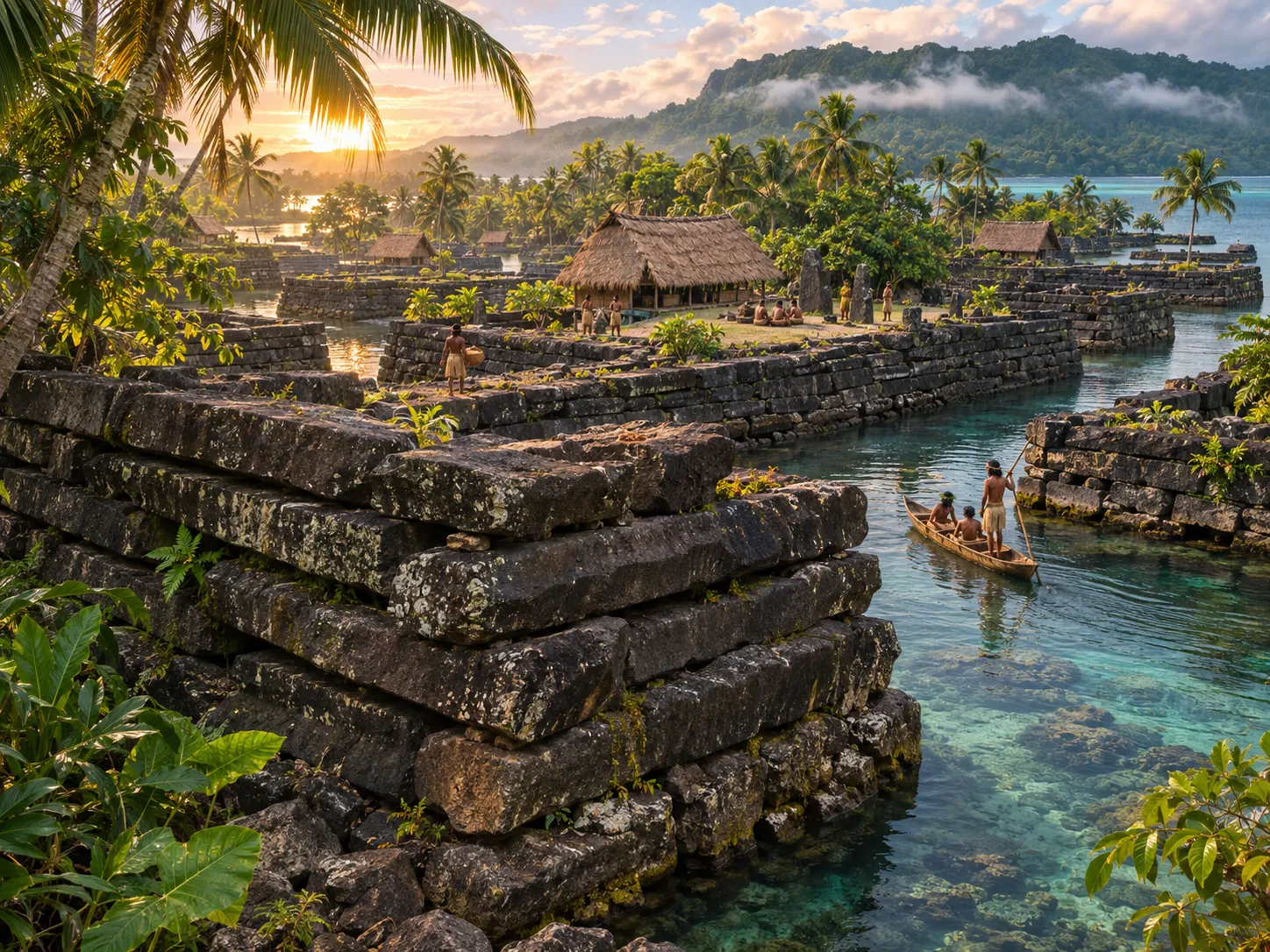 19ILLUSTRATED RECONSTRUCTION
Off Pohnpei, immense basalt walls rise from a complex of constructed islets and waterways. Nan Madol does not resemble the familiar image of a single palace dominating a mainland city. Its ceremonial architecture reorganised a coastal landscape, making separation, connection and access part of political power. The spectacle is extraordinary; the unanswered engineering questions make it more interesting.
UNESCO describes more than 100 islets containing basalt-and-coral structures associated with the ceremonial centre of the Saudeleur dynasty.
Explore the illustrated story ↗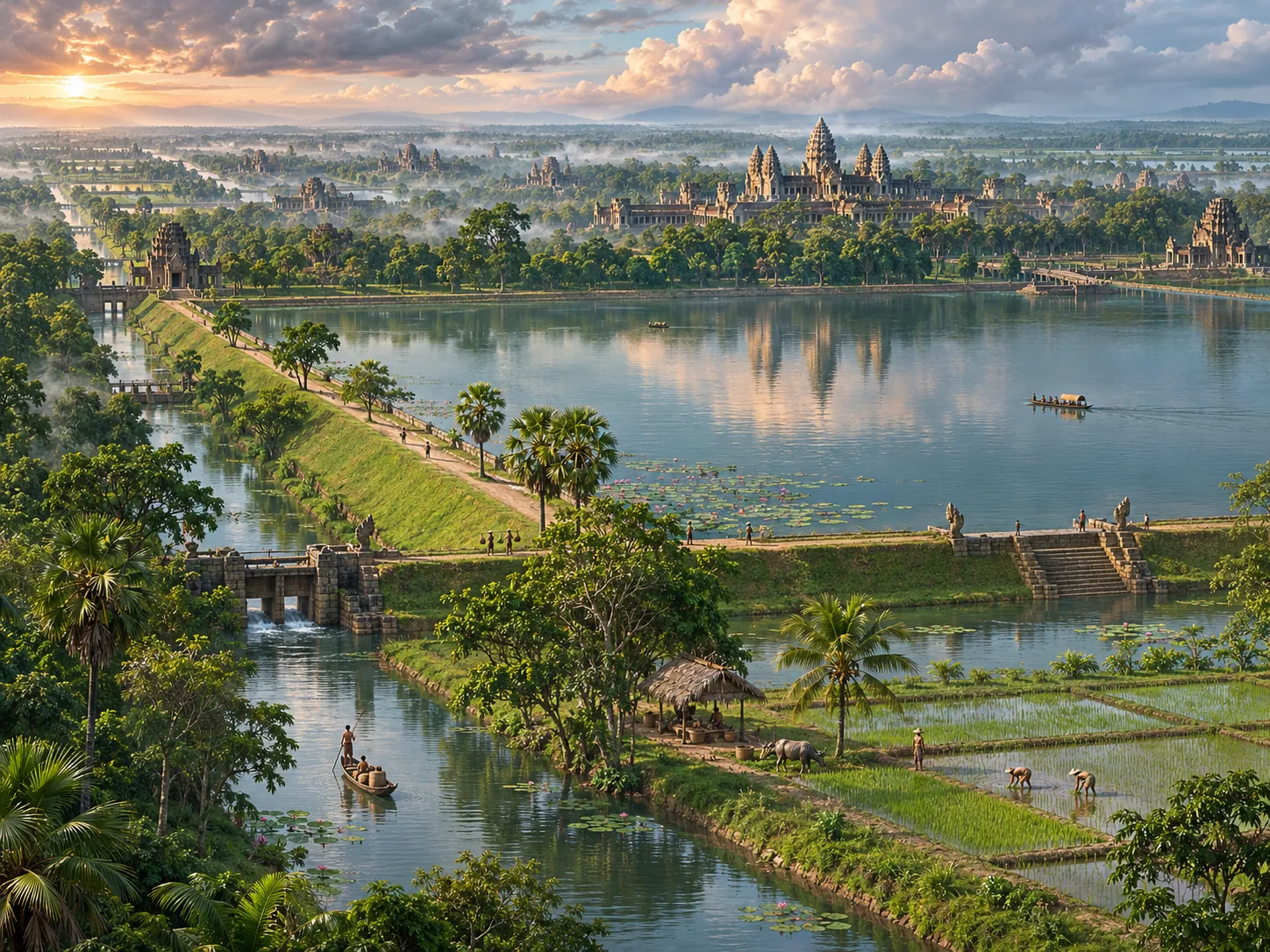 20ILLUSTRATED RECONSTRUCTION
The towers of Angkor command attention, but much of the urban achievement lies beyond them. Reservoirs, canals, embankments, fields and settlements formed a landscape of managed water. Looking between the monuments reveals a deeper story: how a city coordinated an enormous environment, and how the very connections that sustained it could also transmit disruption.
Angkor’s hydraulic landscape included reservoirs, canals, basins and embankments; the temples were parts of a much larger inhabited system.
Explore the illustrated story ↗Clear your search to see all eight stories.
The scenes are AI-generated historical reconstructions. They are not documentary photographs, measured plans or complete reconstructions of lost mechanisms. Where dates, functions or construction methods remain uncertain, the articles say so.
These achievements depended on skilled people, organised labour and continued maintenance. Ingenuity belongs to their human history.
Explore the full History collection →